1/02/2026 (link to here)
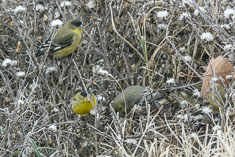
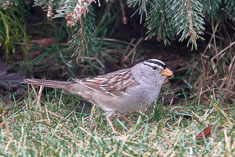
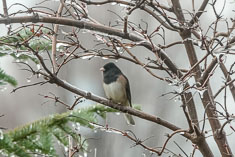 We began the new year yesterday morning with a backyard checklist L+ of course, then did another list L+ this morning. We are now up to 22 species on our
Washington year list, all of them in Walla Walla county. Although I'm not excited about any birding
adventures in the new year, I did enjoy watching the juncos and sparrows around the bird feeders in
Richard and Donna's back yard the past two mornings. Darchelle sat with me some of the time, gave me
sips of coffee and kefir, took a few photos of the birds and leaned me forward in my wheelchair now
and then so I could pass gas.
We began the new year yesterday morning with a backyard checklist L+ of course, then did another list L+ this morning. We are now up to 22 species on our
Washington year list, all of them in Walla Walla county. Although I'm not excited about any birding
adventures in the new year, I did enjoy watching the juncos and sparrows around the bird feeders in
Richard and Donna's back yard the past two mornings. Darchelle sat with me some of the time, gave me
sips of coffee and kefir, took a few photos of the birds and leaned me forward in my wheelchair now
and then so I could pass gas.
Speaking took effort but I was able to toss a comment or two into the conversation happening behind me. Ricardo brought up an idea he had heard recently, about considering what kind of person we want to be at age 80 then adopting habits of thought and behavior that will help us become that kind of person. Apart from the prospect that I will be ashes in an urn well before age 80, I questioned the implied assumption that we are actually able to change our personality and character to any significant degree, particularly if our objective is to comply with some external ideal. But I suppose it can't hurt to try...
Lesser Goldfinches, College Place
White-crowned Sparrow, College Place
Dark-eyed Junco (Oregon), College Place
Speaking took effort but I was able to toss a comment or two into the conversation happening behind me. Ricardo brought up an idea he had heard recently, about considering what kind of person we want to be at age 80 then adopting habits of thought and behavior that will help us become that kind of person. Apart from the prospect that I will be ashes in an urn well before age 80, I questioned the implied assumption that we are actually able to change our personality and character to any significant degree, particularly if our objective is to comply with some external ideal. But I suppose it can't hurt to try...
1/03/2026 Short-eared Owl (link to here)
 Visiting with Darchelle's family has had a higher priority than birding so far this year but this
afternoon we ventured out for an hour to try again to add a Short-eared Owl to our Walla Walla County list.
The owl is usually rare in the county but for at least two years now a few have wintered in a patch of
weedy grassland sandwiched between fields of wheat stubble in the rolling hills along Harvey Shaw Road
northeast of the State Prison. We've tried for them a couple of times but without much conviction. Today
we drove out there at sunset and didn't need much conviction. The first bird we saw after passing the
Penitentiary was a Short-eared Owl sailing over wheat stubble along Hwy 125.
Visiting with Darchelle's family has had a higher priority than birding so far this year but this
afternoon we ventured out for an hour to try again to add a Short-eared Owl to our Walla Walla County list.
The owl is usually rare in the county but for at least two years now a few have wintered in a patch of
weedy grassland sandwiched between fields of wheat stubble in the rolling hills along Harvey Shaw Road
northeast of the State Prison. We've tried for them a couple of times but without much conviction. Today
we drove out there at sunset and didn't need much conviction. The first bird we saw after passing the
Penitentiary was a Short-eared Owl sailing over wheat stubble along Hwy 125.
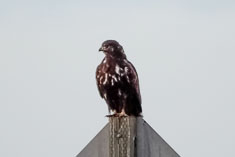
The second was a Harlan's Hawk, perhaps the same individual Darchelle photographed two months ago in College Place.
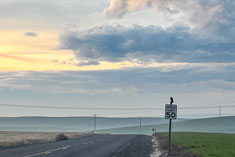
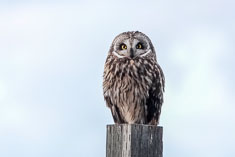
Turning onto Harvey Shaw Road L+ we caught up to the owl perched on a speed limit signpost. Darchelle got photos. A mile north on Harvey Shaw Road we found the rest of the local raptors, as many as five in view at one time coursing low over the hillsides. Now and then one would wheel abruptly and plunge into the grass. We didn't see any come up with prey but there must be lots of mice there to attract so many hawks.
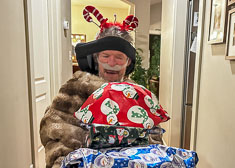 When we returned from owling it was time to open presents. Darchelle came up with a variation of
the "white elephant" gift exchange we've done together in the past. It sounded a bit peculiar on
paper but worked great in practice and as far as we could tell, no one went home unhappy. Darchelle
and her sisters provided most of the gifts, which ranged in value from a couple dollars to a couple
hundred.
When we returned from owling it was time to open presents. Darchelle came up with a variation of
the "white elephant" gift exchange we've done together in the past. It sounded a bit peculiar on
paper but worked great in practice and as far as we could tell, no one went home unhappy. Darchelle
and her sisters provided most of the gifts, which ranged in value from a couple dollars to a couple
hundred.
Each participant, all 15 of us, drew a number to determine the order of gift slection. For our turn we would pick a present from the pile in the living room and open it. If we liked what we got that was it but if not, we could offer it to whomever wanted it and choose among the prospective recipients based on their reasons. After giving away our gift, or adding it to the rejects under the coffee table if no one wanted it, we could return to the pile for another present. We were in theory stuck with that one but thanks to some leniency around the rules and an active secondary gift exchange market, everyone eventually received something they wanted. Some people made out like bandits because there was no limit on the number of other people's rejects someone could receive.
It helped that there were two or three times as many presents as there were people, especially younger people, to receive them, and that the three primary Santas obviously put some thought into what they put under the tree. It also helped that among the gifts were some, such as our 2026 calendars, which were designated for certain recipients. Given the seasonal enthusiasm for getting (and of course giving) gifts, the party grew a bit raucous at times but everyone, even Donna and I, enjoyed it.
Red-tailed (Harlan's) Hawk (dark phase), Walla Walla
Harvey Shaw Road with owl, Walla Walla
Short-eared Owl, Walla Walla
The second was a Harlan's Hawk, perhaps the same individual Darchelle photographed two months ago in College Place.
Turning onto Harvey Shaw Road L+ we caught up to the owl perched on a speed limit signpost. Darchelle got photos. A mile north on Harvey Shaw Road we found the rest of the local raptors, as many as five in view at one time coursing low over the hillsides. Now and then one would wheel abruptly and plunge into the grass. We didn't see any come up with prey but there must be lots of mice there to attract so many hawks.
Brian playing Santa
Each participant, all 15 of us, drew a number to determine the order of gift slection. For our turn we would pick a present from the pile in the living room and open it. If we liked what we got that was it but if not, we could offer it to whomever wanted it and choose among the prospective recipients based on their reasons. After giving away our gift, or adding it to the rejects under the coffee table if no one wanted it, we could return to the pile for another present. We were in theory stuck with that one but thanks to some leniency around the rules and an active secondary gift exchange market, everyone eventually received something they wanted. Some people made out like bandits because there was no limit on the number of other people's rejects someone could receive.
It helped that there were two or three times as many presents as there were people, especially younger people, to receive them, and that the three primary Santas obviously put some thought into what they put under the tree. It also helped that among the gifts were some, such as our 2026 calendars, which were designated for certain recipients. Given the seasonal enthusiasm for getting (and of course giving) gifts, the party grew a bit raucous at times but everyone, even Donna and I, enjoyed it.
1/05/2026 County Birds (link to here)
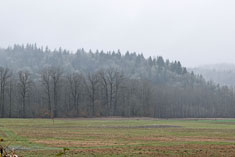
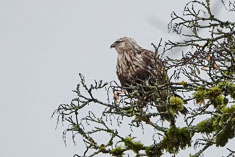 On our way home we chased a few county birds in the still-soggy Snoqualmie Valley. I spotted the Ross's
Goose near Sikes Lake L+
(the tiny white dot in the lower left center of the photo) immediately and a few minutes later Darchelle
found the Rough-legged Hawk along nearby NE 100th St. We were a few days too late to see the Great Egret,
which has not been reported since the last day of 2025. We were glad that our other targets chose to stick
around and wait for our return.
On our way home we chased a few county birds in the still-soggy Snoqualmie Valley. I spotted the Ross's
Goose near Sikes Lake L+
(the tiny white dot in the lower left center of the photo) immediately and a few minutes later Darchelle
found the Rough-legged Hawk along nearby NE 100th St. We were a few days too late to see the Great Egret,
which has not been reported since the last day of 2025. We were glad that our other targets chose to stick
around and wait for our return.
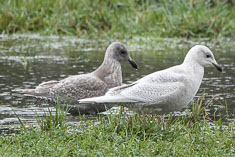
 The rarest bird we saw was a gull which I've never seen in Washington - a Kumlien's Iceland Gull. It
and Thayer's became the eastern and western subspecies of the Iceland Gull in 2017. Structurally they
are identical or close to it but the Kumlien's has white to gray wingtips and the Thayer's, gray to black.
Immature plumages of Kumlien's are paler overall than corresponding plumages of Thayer's as well.
The rarest bird we saw was a gull which I've never seen in Washington - a Kumlien's Iceland Gull. It
and Thayer's became the eastern and western subspecies of the Iceland Gull in 2017. Structurally they
are identical or close to it but the Kumlien's has white to gray wingtips and the Thayer's, gray to black.
Immature plumages of Kumlien's are paler overall than corresponding plumages of Thayer's as well.
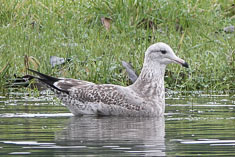
A bird more easily confused with a 1st winter (1W) Thayer's Gull is the 1W American Herring Gull we also identified in the gull puddle along NE 100st St. In the Herring Gull, the bill is longer, the overall tone of the plumage is warmer and the primary tips lack the frosted edges of the Thayer's.
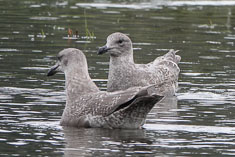
Most of the gulls in the puddle were 1W Glaucous-winged Gulls. While these large gray-brown gulls are not striking in their appearance, they are distinctive among immature gulls because of their uniform color. Body feathers, wing coverts, primaries and tail are all the same shade of dull brown.
We concluded the afternoon with a search for the Glaucous Gull which we saw with Greg on the 31st, scanning the gull flock in the pastures and produce fields of Steel Wheel Farm L+ until dusk but without success.
Ross's and Cackling Geese, Carnation
Rough-legged Hawk, Carnation
Iceland Gull (Kunlein's 1W), Carnation
American Herring Gull (1W?), Carnation
Glaucous-winged Gull (1W), Carnation
A bird more easily confused with a 1st winter (1W) Thayer's Gull is the 1W American Herring Gull we also identified in the gull puddle along NE 100st St. In the Herring Gull, the bill is longer, the overall tone of the plumage is warmer and the primary tips lack the frosted edges of the Thayer's.
Most of the gulls in the puddle were 1W Glaucous-winged Gulls. While these large gray-brown gulls are not striking in their appearance, they are distinctive among immature gulls because of their uniform color. Body feathers, wing coverts, primaries and tail are all the same shade of dull brown.
We concluded the afternoon with a search for the Glaucous Gull which we saw with Greg on the 31st, scanning the gull flock in the pastures and produce fields of Steel Wheel Farm L+ until dusk but without success.
1/08/2026 Taiga Flycatcher (link to here)
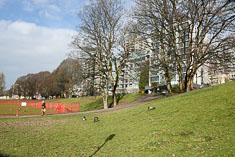
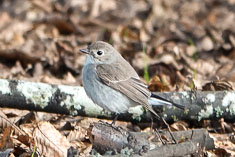
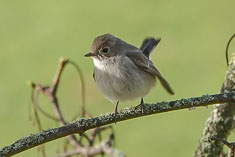 Sometime last month a Taiga Flycatcher was discovered in an urban waterfront park in North Vancouver.
Had it been in Washington we would have dashed off to see it for it would have been both a state bird
(new for us in the state of Washington) and a life bird (new for us in the ABA area, that is, North
America north of Mexico), as well as a year bird (new for the current year in Washington) and a
county bird (new in whichever county it was located). Every lister has their priorities; for me they
are state, year, life and county, in that order.
Sometime last month a Taiga Flycatcher was discovered in an urban waterfront park in North Vancouver.
Had it been in Washington we would have dashed off to see it for it would have been both a state bird
(new for us in the state of Washington) and a life bird (new for us in the ABA area, that is, North
America north of Mexico), as well as a year bird (new for the current year in Washington) and a
county bird (new in whichever county it was located). Every lister has their priorities; for me they
are state, year, life and county, in that order.
My listing priorities rendered the Taiga Flycatcher in British Columbia, despite it being only the second North American record of this Asian species, a relatively unimportant bird for us. Were it not for our FOMO we might not have bothered to make the trip but Fear Of Missing Out finally impelled us to dig out our passports and venture across the border into the foreign country of Canada. We would almost certainly never have another opportunity to see this bird, which so many other local birdwatchers were seeing, and the longer we waited, the greater our chances of missing it would be. So we went.
The border crossing was easy. Trump notwithstanding, Canadians apparently still admit us ugly Americans into their country. Google navigation still worked and we found Sunset Beach Park L+ without much difficulty. We spotted the bird, thanks to another birder with a big lens, even before we found a parking place. I waited in the car while Darchelle joined the posse of photographers chasing it around the park and got a few photos of our own.
Once safely back in the USA, where paramilitary thugs are seizing and imprisoning people whose skin color differs from that of their president and his supporters, we stopped at the Blaine Marina L+ to look for the Yellow-billed Loon which other people have been seeing there. The breeze was cold so I watched from the car with my opera glasses while Darchelle scoped the bay and identified the distant water birds, including the loon. I saw that one but couldn't pick out the Pacific Loons, and maybe not the Long-tailed Ducks either. At least I had seen the flycatcher.
Sunset Beach Park, Vancouver BC
Taiga Flycatcher, Vancouver BC
Taiga Flycatcher, Vancouver BC
My listing priorities rendered the Taiga Flycatcher in British Columbia, despite it being only the second North American record of this Asian species, a relatively unimportant bird for us. Were it not for our FOMO we might not have bothered to make the trip but Fear Of Missing Out finally impelled us to dig out our passports and venture across the border into the foreign country of Canada. We would almost certainly never have another opportunity to see this bird, which so many other local birdwatchers were seeing, and the longer we waited, the greater our chances of missing it would be. So we went.
The border crossing was easy. Trump notwithstanding, Canadians apparently still admit us ugly Americans into their country. Google navigation still worked and we found Sunset Beach Park L+ without much difficulty. We spotted the bird, thanks to another birder with a big lens, even before we found a parking place. I waited in the car while Darchelle joined the posse of photographers chasing it around the park and got a few photos of our own.
Once safely back in the USA, where paramilitary thugs are seizing and imprisoning people whose skin color differs from that of their president and his supporters, we stopped at the Blaine Marina L+ to look for the Yellow-billed Loon which other people have been seeing there. The breeze was cold so I watched from the car with my opera glasses while Darchelle scoped the bay and identified the distant water birds, including the loon. I saw that one but couldn't pick out the Pacific Loons, and maybe not the Long-tailed Ducks either. At least I had seen the flycatcher.
1/15/2026 Piano Ranch (link to here)
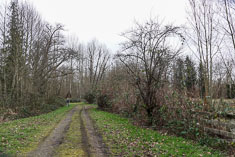
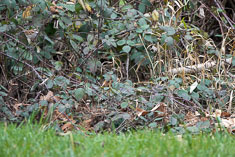
 We returned to the Snoqualmie Valley near Fall City for the third time this month, this time to
search for a Palm Warbler reported a few days ago at the Piano Ranch. Piano Ranch is a small
natural area across the street from the Steel Wheel Farm, where we searched unsuccessfully for the
Glaucous Gull on our previous two visits. It, like most everything else in the Snoqualmie Valley,
sits in the floodplain of the Snoqualmie River and preserves some of the native cottonwood forest
which I assume was once the dominant, or at least successional, plant community in the area.
Agriculture, with a mix of pastures, hayfields and croplands, dominates the valley now though the
river is still in charge, as indicated by the grass and weeds left hanging at head height from
roadside bushes by late December floods.
We returned to the Snoqualmie Valley near Fall City for the third time this month, this time to
search for a Palm Warbler reported a few days ago at the Piano Ranch. Piano Ranch is a small
natural area across the street from the Steel Wheel Farm, where we searched unsuccessfully for the
Glaucous Gull on our previous two visits. It, like most everything else in the Snoqualmie Valley,
sits in the floodplain of the Snoqualmie River and preserves some of the native cottonwood forest
which I assume was once the dominant, or at least successional, plant community in the area.
Agriculture, with a mix of pastures, hayfields and croplands, dominates the valley now though the
river is still in charge, as indicated by the grass and weeds left hanging at head height from
roadside bushes by late December floods.
We didn't find the warbler today though I think someone else did, so it is apparently still in the area. Darchelle was eager to see it but acknowledged that our chances of getting it on the first try were slim. Chasing Palm Warblers is not my favorite form of birding. They are small, drab-colored and furtive, rarely lingering long in one spot and even more rarely in a spot where I can see them from car or wheelchair and identify them without optics. Nonetheless I had a pleasant enough time, bundled in blankets in my chair while Darchelle wheeled me up and down the road between the blackberry hedges in which the warbler was reputed to reside. Ed and Delia were out there too so we visited some, which was nice.
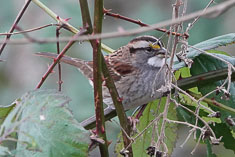
We did get one good bird on our list - a White-throated Sparrow. They are the easiest, and arguably the cutest, of the four challenging winter sparrows which we chase every January. Although we get all four almost every year I don't take any of them, even the White-throated, for granted. As Ed would put it, they are 200-level birds. Of the other three, the American Tree is also 200-level while the Swamp and Harris's are usually tougher, though probably not quite 300-level in most years. About like a Palm Warbler.
Track to Piano Ranch, Fall City
White-throated Sparrow (upper left) in blackberry, Fall City
White-throated Sparrow, Fall City
We didn't find the warbler today though I think someone else did, so it is apparently still in the area. Darchelle was eager to see it but acknowledged that our chances of getting it on the first try were slim. Chasing Palm Warblers is not my favorite form of birding. They are small, drab-colored and furtive, rarely lingering long in one spot and even more rarely in a spot where I can see them from car or wheelchair and identify them without optics. Nonetheless I had a pleasant enough time, bundled in blankets in my chair while Darchelle wheeled me up and down the road between the blackberry hedges in which the warbler was reputed to reside. Ed and Delia were out there too so we visited some, which was nice.
We did get one good bird on our list - a White-throated Sparrow. They are the easiest, and arguably the cutest, of the four challenging winter sparrows which we chase every January. Although we get all four almost every year I don't take any of them, even the White-throated, for granted. As Ed would put it, they are 200-level birds. Of the other three, the American Tree is also 200-level while the Swamp and Harris's are usually tougher, though probably not quite 300-level in most years. About like a Palm Warbler.
1/19/2026 Sequim etc (link to here)
 We crammed three birding trips into the past four days, pushing our bird count for the month into
the low 120's and elevating us into the top 100 in the state for the first time this year.
We crammed three birding trips into the past four days, pushing our bird count for the month into
the low 120's and elevating us into the top 100 in the state for the first time this year.
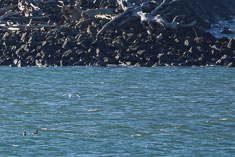
Friday we made the pilgrimmage to Port Gamble L+ to pick up the Harris's Sparrow, our second of the four aforementioned winter sparrows. It proved to be easier than I expected so we continued out to Sequim and found the Lesser Black-backed Gull along Schmuck Road L+, just like last year, and a pair of Marbled Murrelets off Marlyn Nelson Park L+. With still more daylight to burn we drove up to Port Townsend to look for the Ancient Murrelets we'd failed to find at Marlyn Nelson and spotted a few groups among the other alcids, mostly murres, commuting north past Point Wilson L+. For me it would be a stretch to call the experience bird watching but with Darchelle's help I was able to see all of our target species well enough to append them to my year list.
Sunday we drove back out to the Snoqualmie Valley to look for the Palm Warbler. Again we did not find it, though Darchelle enjoyed birding with Sarah P and visiting with Tom and Jan O.
Monday we drove out to the coast for the day, first to the Ocean Shores jetty L+ for rockpipers then around the bay to the Westport jetty L+ for the King Eider. Kellie met us in Ocean Shores and we drove the beach together then tracked down the Palm Warbler across from the Coastal Interpretive Center. Our views of all our important targets were definitive but otherwise unsatisfactory. Kellie photographed the warbler, confirming our brief views, and Darchelle identified the other species through the scope. Not great birding but as Eric H once observed, at least we knocked them out for the year.
Harris's Sparrow, Port Gamble
Lesser Black-backed Gull (center right), Schmuck Road
Common Eider (lower left), Westhaven SP
Friday we made the pilgrimmage to Port Gamble L+ to pick up the Harris's Sparrow, our second of the four aforementioned winter sparrows. It proved to be easier than I expected so we continued out to Sequim and found the Lesser Black-backed Gull along Schmuck Road L+, just like last year, and a pair of Marbled Murrelets off Marlyn Nelson Park L+. With still more daylight to burn we drove up to Port Townsend to look for the Ancient Murrelets we'd failed to find at Marlyn Nelson and spotted a few groups among the other alcids, mostly murres, commuting north past Point Wilson L+. For me it would be a stretch to call the experience bird watching but with Darchelle's help I was able to see all of our target species well enough to append them to my year list.
Sunday we drove back out to the Snoqualmie Valley to look for the Palm Warbler. Again we did not find it, though Darchelle enjoyed birding with Sarah P and visiting with Tom and Jan O.
Monday we drove out to the coast for the day, first to the Ocean Shores jetty L+ for rockpipers then around the bay to the Westport jetty L+ for the King Eider. Kellie met us in Ocean Shores and we drove the beach together then tracked down the Palm Warbler across from the Coastal Interpretive Center. Our views of all our important targets were definitive but otherwise unsatisfactory. Kellie photographed the warbler, confirming our brief views, and Darchelle identified the other species through the scope. Not great birding but as Eric H once observed, at least we knocked them out for the year.
1/22/2026 ALS Clinic (link to here)
As we were leaving the ALS Clinic this afternoon I was feeling that I had talked too much and listened too little but Darchelle reminded me that the main point of these clinic visits is to talk. She told me I light up when I'm talking with the medical folks about my problems and difficulties. They seem sympathetic and interested in what I have to say; Darchelle thinks they probably even look forward to my visits.
I actually couldn't think of many questions to ask at the time. I did ask Dr Mayadev, who several years ago had recommended the combination of Clearlax and Pedialax to deal with constipation, for additional advice on that subject but since I'm not even taking half the recommended dose of the Clearlax, she said it might help to increase it when necessary. Or maybe I suggested that. Senna tea now and then might help too. Geanna the dietician asked if we'tried the high calorie Boost after Darchelle expressed concern about my weight. We hadn't, but Darchelle has been giving me the regular stuff more frequently. I tolerate it reasonably well mixed with coffee. My gross weight with chair and ventilator and the customary clothing was 178.6 lbs, about a pound more than I weighed six months ago. I don't want to gain weight but as long as I'm not losing, none of the medical folks seem concerned.
I also asked Dawn the respiratory therapist if increasing the inspiratory pressure on my BIPAP would help with my occasional shortness of breath, and if there was a reason for its current setting of 17 psi. I do not recall a definitive answer to either question, other than perhaps try it and see. They haven't measured my FVC (lung capacity) for several years now because it is too low to detect. I was reminded of that a week or so later when the BIPAP battery went dead in the middle of the night. The five-beep alarm awoke both of us immediately but it took Darchelle a few seconds, maybe as long as a minute, to figure out what was wrong and get it plugged into the wall. I strained mightily to breathe but might as well just relaxed and enjoyed being breathless for all the good my efforts did. I used to think I could make it five minutes but now I think I'd pass out in two. Two minutes of torture is better than five, I guess.
Speaking of dying, Dr Elliott again brought up the subject of DWD. Is it a bad sign when your primary physician and leader of your multidisciplinary care team asks you about Death With Dignity on two successive visits? If I'd had my wits about me I'd have asked him if there was something about the road ahead that I should know about, something which if I knew about in advance, I might choose to die first. I didn't think to ask.
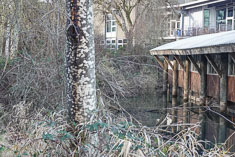
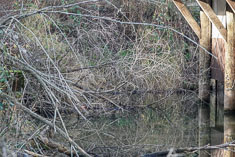
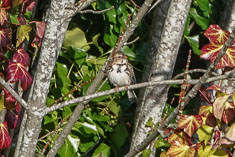
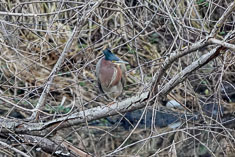 On our way home we drove down along the lakefront L+
behind Husky stadium to look for a Green Heron previously reported in the area. Incredibly, Darchelle
spotted it almost immediately. The center photo above pretty well gives my view of the bird but I
counted it anyhow.
On our way home we drove down along the lakefront L+
behind Husky stadium to look for a Green Heron previously reported in the area. Incredibly, Darchelle
spotted it almost immediately. The center photo above pretty well gives my view of the bird but I
counted it anyhow.
As we were leaving the ALS Clinic this afternoon I was feeling that I had talked too much and listened too little but Darchelle reminded me that the main point of these clinic visits is to talk. She told me I light up when I'm talking with the medical folks about my problems and difficulties. They seem sympathetic and interested in what I have to say; Darchelle thinks they probably even look forward to my visits.
I actually couldn't think of many questions to ask at the time. I did ask Dr Mayadev, who several years ago had recommended the combination of Clearlax and Pedialax to deal with constipation, for additional advice on that subject but since I'm not even taking half the recommended dose of the Clearlax, she said it might help to increase it when necessary. Or maybe I suggested that. Senna tea now and then might help too. Geanna the dietician asked if we'tried the high calorie Boost after Darchelle expressed concern about my weight. We hadn't, but Darchelle has been giving me the regular stuff more frequently. I tolerate it reasonably well mixed with coffee. My gross weight with chair and ventilator and the customary clothing was 178.6 lbs, about a pound more than I weighed six months ago. I don't want to gain weight but as long as I'm not losing, none of the medical folks seem concerned.
I also asked Dawn the respiratory therapist if increasing the inspiratory pressure on my BIPAP would help with my occasional shortness of breath, and if there was a reason for its current setting of 17 psi. I do not recall a definitive answer to either question, other than perhaps try it and see. They haven't measured my FVC (lung capacity) for several years now because it is too low to detect. I was reminded of that a week or so later when the BIPAP battery went dead in the middle of the night. The five-beep alarm awoke both of us immediately but it took Darchelle a few seconds, maybe as long as a minute, to figure out what was wrong and get it plugged into the wall. I strained mightily to breathe but might as well just relaxed and enjoyed being breathless for all the good my efforts did. I used to think I could make it five minutes but now I think I'd pass out in two. Two minutes of torture is better than five, I guess.
Speaking of dying, Dr Elliott again brought up the subject of DWD. Is it a bad sign when your primary physician and leader of your multidisciplinary care team asks you about Death With Dignity on two successive visits? If I'd had my wits about me I'd have asked him if there was something about the road ahead that I should know about, something which if I knew about in advance, I might choose to die first. I didn't think to ask.
Green Heron roosting spot, UW Waterfront
Green Heron (center), UW Waterfront
Green Heron, UW Waterfront
1/23/2026 Dodd Road (link to here)
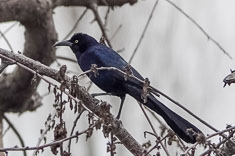
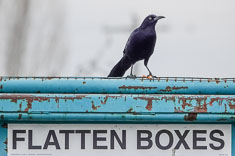
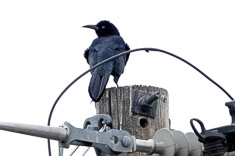 The Great-tailed Grackle behind the gas station and mini-mart on Dodd Road was easier to see than
yesterday's Green Heron. We rewarded it with a couple of leftover deep-fried potato wedges but it
wasn't very interested. Apparently it prefers peanuts and Chitos.
The Great-tailed Grackle behind the gas station and mini-mart on Dodd Road was easier to see than
yesterday's Green Heron. We rewarded it with a couple of leftover deep-fried potato wedges but it
wasn't very interested. Apparently it prefers peanuts and Chitos.
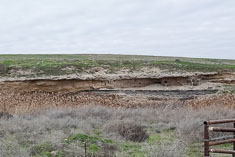
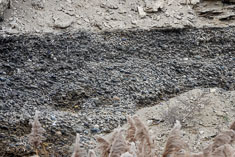
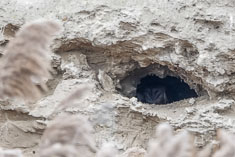 We continued out past the feedlots and over the hill to the borrow pit where Barn Owls roost and
presumably nest in cavities in a bed of what looks like loess - fine-grained orange silt without
obvious cross-bedding and not layered like the rhythmite beds around Touchet and farther up the
Walla Walla valley. Capping the loess is a thin bed of layered whitish rock which from a distance
looks like calcrete, a type of
rock described + by geologist Skye Cooley + as a pedogenic deposit of calcium carbonate formed over
thousands of years in alluvial soil under arid conditions. Above the calcrete is a surface layer of
pale buffy-gray silt, locally 1-2 meters thick, which could be Touchet-type rhythmites or loess,
I can't tell from my photos.
We continued out past the feedlots and over the hill to the borrow pit where Barn Owls roost and
presumably nest in cavities in a bed of what looks like loess - fine-grained orange silt without
obvious cross-bedding and not layered like the rhythmite beds around Touchet and farther up the
Walla Walla valley. Capping the loess is a thin bed of layered whitish rock which from a distance
looks like calcrete, a type of
rock described + by geologist Skye Cooley + as a pedogenic deposit of calcium carbonate formed over
thousands of years in alluvial soil under arid conditions. Above the calcrete is a surface layer of
pale buffy-gray silt, locally 1-2 meters thick, which could be Touchet-type rhythmites or loess,
I can't tell from my photos.
Below the loess is a bed of dark gray gravel composed of well-rounded, fist-sized and smaller cobbles. Their color suggests basalt which in turn suggests transport as the bed load of one of the Missoula floods, which traversed and eroded mainly basalt bedrock. FWIW, most other flood gravels, such as those in places along the Snake and Columbia Rivers, seem to contain mostly light-colored cobbles but on our way home I noticed that the I-82 embankments through the city of Yakima appear to be mulched with the same dark gray river rock.
What is the story of this outcrop? Without up close inspection of the several formations which appear here, I am unlikely to get the story right but will give it a shot anyhow. Assuming that the indurated whitish layer actually is calcrete, it would have to have formed prior to the Missoula floods. Since the channeled scablands formed by those floods cut through the Palouse Hills loess and are themselves only thinly covered by subsequent loess deposits, the orange silt in the borrow pit would, if it is loess, also predate the Missoula floods. The underlying river gravel, if it is in fact mostly basalt, could have been left by a flood associated by a glacial period earlier in the Pleistocene, 500Ka or before, which would allow time for deposition of the orange silt and formation of the calcrete in soil above it.
I really wish I could get out there and investigate more closely but since I can't, I guess its time to ask an expert, if I can find one.
Great-tailed Grackle, Dodd Road
Great-tailed Grackle, Dodd Road
Great-tailed Grackle, Dodd Road
Sediment layers, Dodd Road Borrow Pit
Pasco Gravel, Dodd Road Borrow Pit
American Barn Owl in cavity, Dodd Road Borrow Pit
Below the loess is a bed of dark gray gravel composed of well-rounded, fist-sized and smaller cobbles. Their color suggests basalt which in turn suggests transport as the bed load of one of the Missoula floods, which traversed and eroded mainly basalt bedrock. FWIW, most other flood gravels, such as those in places along the Snake and Columbia Rivers, seem to contain mostly light-colored cobbles but on our way home I noticed that the I-82 embankments through the city of Yakima appear to be mulched with the same dark gray river rock.
What is the story of this outcrop? Without up close inspection of the several formations which appear here, I am unlikely to get the story right but will give it a shot anyhow. Assuming that the indurated whitish layer actually is calcrete, it would have to have formed prior to the Missoula floods. Since the channeled scablands formed by those floods cut through the Palouse Hills loess and are themselves only thinly covered by subsequent loess deposits, the orange silt in the borrow pit would, if it is loess, also predate the Missoula floods. The underlying river gravel, if it is in fact mostly basalt, could have been left by a flood associated by a glacial period earlier in the Pleistocene, 500Ka or before, which would allow time for deposition of the orange silt and formation of the calcrete in soil above it.
I really wish I could get out there and investigate more closely but since I can't, I guess its time to ask an expert, if I can find one.
1/24/2026 Seeking Walla Walla species (link to here)
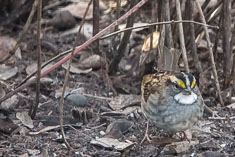
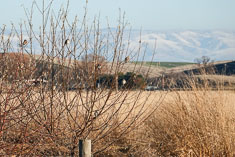
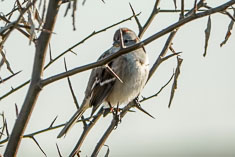 Thanks to Darchelle's research and determination, I added two species to my Walla Walla county list
today, boosting my lifetime total to 239. Both were in Bonnie
R's back yard. We enjoyed talking
with her and Joe while we waited for the White-throated Sparrow and an Anna's Hummingbird to show up
outside her living room window. We of course talked mostly about birds, bird sightings and birding
trips, experiences we shared in common despite never having met before. We had friends in common
too, both through birding and through church. There too we had common experiences and I would have
enjoyed exploring those in more depth but we needed to get back to Darchelle's folks so Richard
could go to Yakima to visit Roger while we stayed with Donna.
Thanks to Darchelle's research and determination, I added two species to my Walla Walla county list
today, boosting my lifetime total to 239. Both were in Bonnie
R's back yard. We enjoyed talking
with her and Joe while we waited for the White-throated Sparrow and an Anna's Hummingbird to show up
outside her living room window. We of course talked mostly about birds, bird sightings and birding
trips, experiences we shared in common despite never having met before. We had friends in common
too, both through birding and through church. There too we had common experiences and I would have
enjoyed exploring those in more depth but we needed to get back to Darchelle's folks so Richard
could go to Yakima to visit Roger while we stayed with Donna.
In the afternoon we persuaded Donna to join us on a field trip to Detour and McDonald Roads L+ outside of Lowden to look for American Tree Sparrows. We found (and Darchelle photographed) eight of them in the pastures and roadside weeds along the south side of McDonald Road. I was grateful for her photos in case the righteous birders (who were not the ones who told us about the sparrows - those birders we would describe as gracious) might be tempted to question our count. I think Donna enjoyed the outing; she doesn't get out of the house much and it was a beautiful afternoon.
White-throated Sparrow, Walla Walla
Song and American Tree Sparrows, Lowden
American Tree Sparrow, Lowden
In the afternoon we persuaded Donna to join us on a field trip to Detour and McDonald Roads L+ outside of Lowden to look for American Tree Sparrows. We found (and Darchelle photographed) eight of them in the pastures and roadside weeds along the south side of McDonald Road. I was grateful for her photos in case the righteous birders (who were not the ones who told us about the sparrows - those birders we would describe as gracious) might be tempted to question our count. I think Donna enjoyed the outing; she doesn't get out of the house much and it was a beautiful afternoon.
1/26/2026 Hits and Misses (link to here)
We drove up to Pasco yesterday morning in our second attempt to see the Slaty-backed Gull which has been spotted regularly roosting on a roof near the river on South 20th Ave L+. We waited at least two hours for the gull to show up but it did not. On the other hand Mike and MerryLynn did show up, along with Bonnie and Joe, and visiting with them tempered our disappointment at missing the gull.
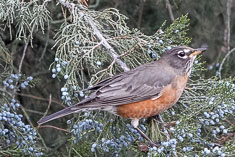
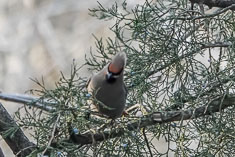
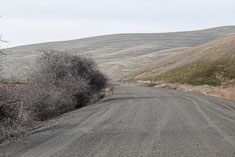 Towards the end of the afternoon we went out again, this time to
Juniper Street L+
in response to a fresh report of Bohemian Waxwings. Boheehees, as we affectionately call them, have
been hard to come by this winter and these birds were only 15 minutes away. We missed them anyhow,
at least Darchelle did. While we were watching dozens, possibly hundreds, of American Robins and
Cedar Waxwings visiting the front side of a big juniper tree laden with blue berries, the Bohemians
were quietly eating berries on the back side of the tree. We know that because a neighbor
photographed them while Darchelle was standing in the street watching. By the time we figured out
out where they were, the Boheehees had gone, though not before I happened to hear one calling as it
flew over the car.
Towards the end of the afternoon we went out again, this time to
Juniper Street L+
in response to a fresh report of Bohemian Waxwings. Boheehees, as we affectionately call them, have
been hard to come by this winter and these birds were only 15 minutes away. We missed them anyhow,
at least Darchelle did. While we were watching dozens, possibly hundreds, of American Robins and
Cedar Waxwings visiting the front side of a big juniper tree laden with blue berries, the Bohemians
were quietly eating berries on the back side of the tree. We know that because a neighbor
photographed them while Darchelle was standing in the street watching. By the time we figured out
out where they were, the Boheehees had gone, though not before I happened to hear one calling as it
flew over the car.
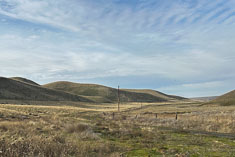
 We returned to the big juniper on Juniper Street L+ first thing this morning. I watched the front of the tree
while Darchelle walked around to the back and photographed her Bohemian Waxwing.
We returned to the big juniper on Juniper Street L+ first thing this morning. I watched the front of the tree
while Darchelle walked around to the back and photographed her Bohemian Waxwing.
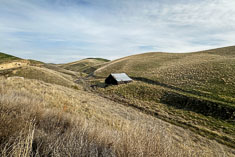
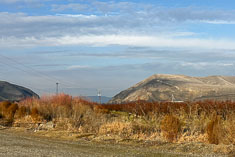
On the way home we drove up to Prescott and out Donnelly Road L+, a roller-coaster ride through some of the more scenic stubble fields of the Palouse. Continuing homeward we found ourselves a few miles south of Yakima when it was time for Darchelle's phone appointment. I managed to get us to a secluded spot in an orchard a mile or so off the freeway in time for her to set me up outside in the wheelchair with my audiobook (Pillars of the Earth) while she took her call in the car. A couple of vehicles came by but their occupants couldn't be bothered to stop and bother us. I watched birds L+, including a Merlin, a Kestrel and a flock of 153 Dark-eyed Juncos. I counted each one.
We drove up to Pasco yesterday morning in our second attempt to see the Slaty-backed Gull which has been spotted regularly roosting on a roof near the river on South 20th Ave L+. We waited at least two hours for the gull to show up but it did not. On the other hand Mike and MerryLynn did show up, along with Bonnie and Joe, and visiting with them tempered our disappointment at missing the gull.
American Robin, Walla Walla
Bohemian Waxwing, Walla Walla
Donnelly Road, Prescott
Donnelly Road, Prescott
Donnelly Road, Prescott
Union Gap from Ragan Road, Yakima
On the way home we drove up to Prescott and out Donnelly Road L+, a roller-coaster ride through some of the more scenic stubble fields of the Palouse. Continuing homeward we found ourselves a few miles south of Yakima when it was time for Darchelle's phone appointment. I managed to get us to a secluded spot in an orchard a mile or so off the freeway in time for her to set me up outside in the wheelchair with my audiobook (Pillars of the Earth) while she took her call in the car. A couple of vehicles came by but their occupants couldn't be bothered to stop and bother us. I watched birds L+, including a Merlin, a Kestrel and a flock of 153 Dark-eyed Juncos. I counted each one.
1/30/2026 Red-shouldered Hawk (link to here)
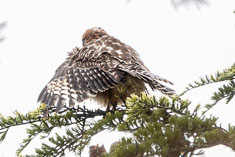
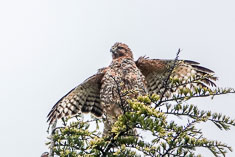
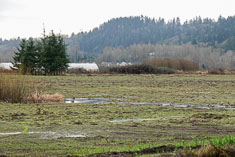 We drove down to Kent today aound midday and found the Red-shouldered Hawk, as advertised, sitting
in a cottonwood tree across from Prologis. We did not find the Black Phoebe along S 204th St, the
Swamp Sparrow at Tolt-MacDonald Park or the Great Egret at Sikes Lake. Or any Western Screech Owls
on Cougar Mountain.
We drove down to Kent today aound midday and found the Red-shouldered Hawk, as advertised, sitting
in a cottonwood tree across from Prologis. We did not find the Black Phoebe along S 204th St, the
Swamp Sparrow at Tolt-MacDonald Park or the Great Egret at Sikes Lake. Or any Western Screech Owls
on Cougar Mountain.
Red-shouldered Hawk, Kent
Red-shouldered Hawk, Kent
Pasture along S 204th, Kent
1/31/2026 January (link to here)
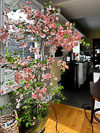 The January effect+ appears
to have boosted the DOW 1.7% and the S&P500 1.4% over the past month but our personal birding
January
effect did not match last year's stellar performance. My January total of 137 species
represented an increase of 37% over December but fell short of last January's count by 21%. We
spent all or part of 11 days in the field and submitted 52 complete checklists. We slept all but
seven nights in our own bed.
The January effect+ appears
to have boosted the DOW 1.7% and the S&P500 1.4% over the past month but our personal birding
January
effect did not match last year's stellar performance. My January total of 137 species
represented an increase of 37% over December but fell short of last January's count by 21%. We
spent all or part of 11 days in the field and submitted 52 complete checklists. We slept all but
seven nights in our own bed.
Bougainvillea winter bloom
A significant sartorial innovation this month was our use of pants which Darchelle can get me into
without having to hold me up with one arm while pulling my pants up with her free hand. That
approach, which had been working for more than four years, became more or less untenable a few
months ago when I could no longer consistently lock my knees to help her support me. Early in
January she sliced a pair of my sweat pants down the outside of both legs and replaced the seam
with Velcro. She positions the back panel of the pants on the seat of the wheelchair before
transferring me into it then velcros up the legs to the waist after I'm seated. I had a different
approach which involved cutting out the seat of the pants and one side of the waistband, then
wrapping the free end of the waistband and attached seat flap behind me and reattaching it with
velcro. This approach required first inserting my legs into the pant legs and sliding the crotch of
the pants between my legs and under my seat as far as possible but offered the advantage of allowing her to put my
pants on after I was already sitting in the chair.
Once having proven the concept Darchelle searched online and found both types of pants available with zippers and snaps, and presenting a much more finished appearance then our test versions. We purchased both types but so far have mostly used the full leg zip type. The seat flap has the drawback of exposing my bare ass on transfers, which is probably more of an issue for onlookers than it is for me. I haven't seen my butt in years but I doubt that it is an appealing sight.
Once having proven the concept Darchelle searched online and found both types of pants available with zippers and snaps, and presenting a much more finished appearance then our test versions. We purchased both types but so far have mostly used the full leg zip type. The seat flap has the drawback of exposing my bare ass on transfers, which is probably more of an issue for onlookers than it is for me. I haven't seen my butt in years but I doubt that it is an appealing sight.
Darchelle asked me if I enjoyed the birding we did in January. I didn't have a quick answer;
eventuality I replied "What else am I going to do?" What do other people with ALS do, I wonder?
Watch movies and TV, I suppose. Read books or listen to audiobooks. Eat. Sleep. Die. I guess I
still prefer birding, at least some of the time, and even though I can't hold optics, can't turn
my head to follow a bird in flight, can't write notes or lists in the field, can't step off the
road or a paved path, I still enjoy birding, I think.
2/05/2026 Swans (link to here)
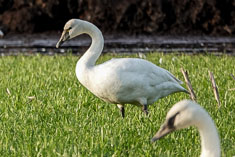
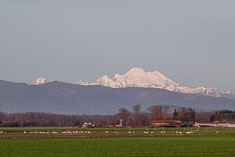
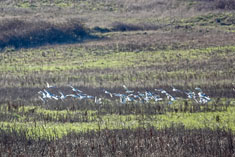
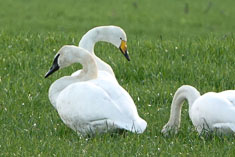 The rare swan we sought and missed along Polson Road L+ near Conway yesterday afternoon turned up a half hour closer to
home in Arlington today so we went after it again. It turned out that on our way home yesterday
we'd driven right by it. Had we known exactly where to look we could have seen it (though not
identified it) from the freeway. Armed with updated information this afternon we found the bird, a
rare Whooper Swan from Asia, grazing in a green hay field L+ with 150 very similar Trumpeter Swans. A very
large white bird in a field full of very large white birds.
The rare swan we sought and missed along Polson Road L+ near Conway yesterday afternoon turned up a half hour closer to
home in Arlington today so we went after it again. It turned out that on our way home yesterday
we'd driven right by it. Had we known exactly where to look we could have seen it (though not
identified it) from the freeway. Armed with updated information this afternon we found the bird, a
rare Whooper Swan from Asia, grazing in a green hay field L+ with 150 very similar Trumpeter Swans. A very
large white bird in a field full of very large white birds.
Tundra Swans, Fir Island
Swans and Mount Baker, Fir Island
Trumpeter and Whooper Swans, Arlington
2/06/2026 To Walla Walla (link to here)
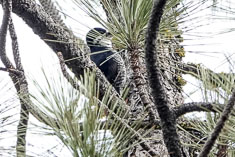
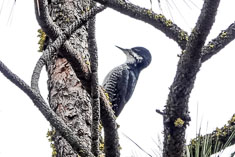
 On our way over from Seattle we stopped at a patch of recently burned Ponderosa Pine forest along Red
Bridge Road in the Teanaway valley east of Cle Elum. The road runs along the edge of valley with
new houses scattered in the flat pastures on one side of the road and ramshackle older places
nestled in the pines at the foot of the hill on the other side. It was those pines that burned. As
fires go it was neither large nor particularly hot. A few patches of the pines were killed but in
most areas just the lower trunks were charred leaving most of the crowns green.
On our way over from Seattle we stopped at a patch of recently burned Ponderosa Pine forest along Red
Bridge Road in the Teanaway valley east of Cle Elum. The road runs along the edge of valley with
new houses scattered in the flat pastures on one side of the road and ramshackle older places
nestled in the pines at the foot of the hill on the other side. It was those pines that burned. As
fires go it was neither large nor particularly hot. A few patches of the pines were killed but in
most areas just the lower trunks were charred leaving most of the crowns green.
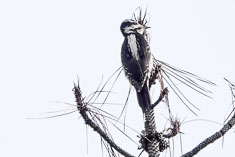
The bird we were looking for, a Black-backed Woodpecker, prefers the dead pines. It scales off bits of the charred pine bark leaving telltale orange scars on the blackened trunks. We spotted numerous pines with scaled bark as soon as we drove up but it took us a while to locate the woodpeckers. While we were calling for them a man came over to see what we were doing. He was not much taller than Darchelle with a broad face, a grizzled beard which rippled like windblown grass down over his chin and a quiet voice which I had to strain a bit to hear over the hum of my ventilator. He had grown up in a rambling one-story house with weathered orange pine siding and mismatched metal roofing which we could see between the charred trunks of the nearby trees. He'd lived there for 70 years, he told us, but he would be moving soon. Because of the fire, I wondered to myself, but apparently not because he was moving to nearby Liberty, an old gold-mining town at even higher risk from forest fires.
I asked him about the fire. It was the previous July, he told us, and had probably been started along the side of the road by a man who had never been identified but who had been seen running away when the smoke had started to show. He had lost his barn and a shed to the fire but had nothing but praise for the firefighters who had showed up in time to save his house. When we told him about the woodpeckers he told us he'd seen one a week or so earlier pecking at a burned pine trunk in his yard. That was the bird we were looking for, we told him, and it was good to know that it was still in the area. It turned out they were 100 yards farther down the road. I heard them, Darchelle got photos and we were on our way.
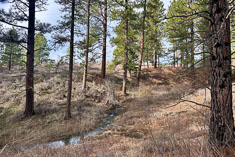
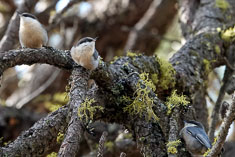
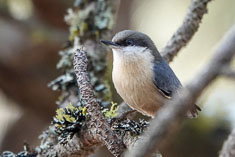 Well almost. Before leaving Wiehl Road L+ we drove up to the end, less than a mile, to see if we could score
a third woodpecker - a White-headed. We did not, but we found a little group of curious Pygmy
Nuthatches in an open group of pines and Darchelle got some cute photos.
Well almost. Before leaving Wiehl Road L+ we drove up to the end, less than a mile, to see if we could score
a third woodpecker - a White-headed. We did not, but we found a little group of curious Pygmy
Nuthatches in an open group of pines and Darchelle got some cute photos.
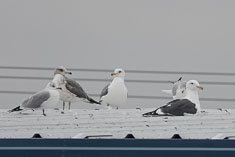
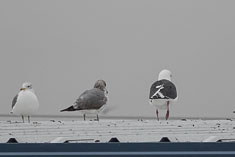 Two hours later we stopped by a garage door company in a light-industrial section of Pasco L+, a location we've visited
three other times in the past month. The garage doors aren't the attraction. We were instead
interested in the gulls that loaf on the roof. One particular gull actually, a Slaty-backed from
Siberia which has been wintering in the Tri-Cities since 2016. Today it was finally at home to greet
us, napping with a flock of California and Ring-billed Gulls. We probably won't make the effort to
see it again this year, handsome though it is. I'm afraid both the gull and I are approaching our
expiration dates but if we're both still around a year from now I hope we'll meet again.
Two hours later we stopped by a garage door company in a light-industrial section of Pasco L+, a location we've visited
three other times in the past month. The garage doors aren't the attraction. We were instead
interested in the gulls that loaf on the roof. One particular gull actually, a Slaty-backed from
Siberia which has been wintering in the Tri-Cities since 2016. Today it was finally at home to greet
us, napping with a flock of California and Ring-billed Gulls. We probably won't make the effort to
see it again this year, handsome though it is. I'm afraid both the gull and I are approaching our
expiration dates but if we're both still around a year from now I hope we'll meet again.
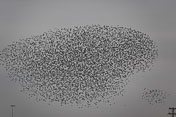
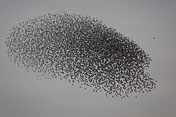
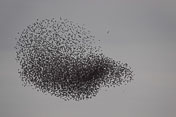
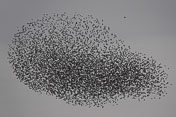 South of Pasco we drove out Dodd Road and turned south along the gravel road along the east side of
the Tyson feedlot L+,
scanning the ponds and the new poop piles for the Glaucous Gull the Denny's and others had
reported earlier in the week. Finding no gulls, we continued down the road until it dead-ended at
some kind of utility station enclosed by a chain link fence. A two-track continued into the weeds
so we followed that across the valley and up onto a ridge where a two lane paved road led us to
another utility station. It looked like the kind of place to which birdwatchers and other members
of the public are not invited but it offered a good overview of the area around the original poop
piles as well as the big roof where gulls hang out. Up the hill from us along the south edge of the
feedlot the birds, mostly starlings were restless and after a few minutes rose up all together in a
murmuration which though less dramatic than some we've seen was still impressive. Photos revealed
the reason, a Merlin.
South of Pasco we drove out Dodd Road and turned south along the gravel road along the east side of
the Tyson feedlot L+,
scanning the ponds and the new poop piles for the Glaucous Gull the Denny's and others had
reported earlier in the week. Finding no gulls, we continued down the road until it dead-ended at
some kind of utility station enclosed by a chain link fence. A two-track continued into the weeds
so we followed that across the valley and up onto a ridge where a two lane paved road led us to
another utility station. It looked like the kind of place to which birdwatchers and other members
of the public are not invited but it offered a good overview of the area around the original poop
piles as well as the big roof where gulls hang out. Up the hill from us along the south edge of the
feedlot the birds, mostly starlings were restless and after a few minutes rose up all together in a
murmuration which though less dramatic than some we've seen was still impressive. Photos revealed
the reason, a Merlin.
Black-backed Woodpecker, Cle Elum
Black-backed Woodpecker, Cle Elum
Hairy Woodpecker, Cle Elum
The bird we were looking for, a Black-backed Woodpecker, prefers the dead pines. It scales off bits of the charred pine bark leaving telltale orange scars on the blackened trunks. We spotted numerous pines with scaled bark as soon as we drove up but it took us a while to locate the woodpeckers. While we were calling for them a man came over to see what we were doing. He was not much taller than Darchelle with a broad face, a grizzled beard which rippled like windblown grass down over his chin and a quiet voice which I had to strain a bit to hear over the hum of my ventilator. He had grown up in a rambling one-story house with weathered orange pine siding and mismatched metal roofing which we could see between the charred trunks of the nearby trees. He'd lived there for 70 years, he told us, but he would be moving soon. Because of the fire, I wondered to myself, but apparently not because he was moving to nearby Liberty, an old gold-mining town at even higher risk from forest fires.
I asked him about the fire. It was the previous July, he told us, and had probably been started along the side of the road by a man who had never been identified but who had been seen running away when the smoke had started to show. He had lost his barn and a shed to the fire but had nothing but praise for the firefighters who had showed up in time to save his house. When we told him about the woodpeckers he told us he'd seen one a week or so earlier pecking at a burned pine trunk in his yard. That was the bird we were looking for, we told him, and it was good to know that it was still in the area. It turned out they were 100 yards farther down the road. I heard them, Darchelle got photos and we were on our way.
Ponderosa Pine grove at Wiehl Road, Cle Elum
Pygmy Nuthatch, Cle Elum
Pygmy Nuthatches, Cle Elum
Slaty-backed Gull, Pasco
Slaty-backed Gull, Pasco
European Starling murmuration, Wallula
2500 Starlings and a Merlin, Wallula
2500 Starlings and a Merlin, Wallula
2500 Starlings and a Merlin, Wallula
2/07/2026 Walla Walla (link to here)
Richard went to church in the morning while Darchelle and I stayed home with Donna then we all went over to Sally's for lunch. The cuisine was Greek - several salads, felafel, french fries(!), rice and homemade bread by Heather and for dessert, Baklava by Gracie and chocolate cake by Katie. I particularly enjoyed the Baklava.
After lunch Darchelle and I drove up Lewis Peak Road almost to the end of the right fork. Though we found a few inches of patchy old snow in places, the road tread was bare all the way. No owls.
Richard went to church in the morning while Darchelle and I stayed home with Donna then we all went over to Sally's for lunch. The cuisine was Greek - several salads, felafel, french fries(!), rice and homemade bread by Heather and for dessert, Baklava by Gracie and chocolate cake by Katie. I particularly enjoyed the Baklava.
After lunch Darchelle and I drove up Lewis Peak Road almost to the end of the right fork. Though we found a few inches of patchy old snow in places, the road tread was bare all the way. No owls.
2/09/2026 Flat Tire (link to here)
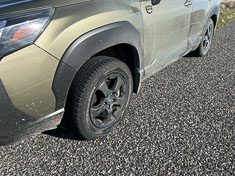
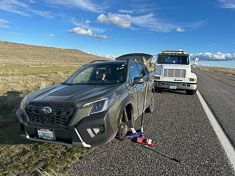 We were passing a pickup + horse trailer combo at 75 mph on hwy 240 about twenty miles north of
Richland when the car suddenly felt a little unstable. We'd just made it back into our lane when
the green flat tire symbol flashed on. We pulled over onto the paved shoulder and the horse
trailer, then the semi behind it, roared past. In the silence that followed Darchelle got out to
check and found the problem. The left front tire was flat. We could hardly believe it. One of our
rugged almost-new All Terrain tires was actually flat!
We were passing a pickup + horse trailer combo at 75 mph on hwy 240 about twenty miles north of
Richland when the car suddenly felt a little unstable. We'd just made it back into our lane when
the green flat tire symbol flashed on. We pulled over onto the paved shoulder and the horse
trailer, then the semi behind it, roared past. In the silence that followed Darchelle got out to
check and found the problem. The left front tire was flat. We could hardly believe it. One of our
rugged almost-new All Terrain tires was actually flat!
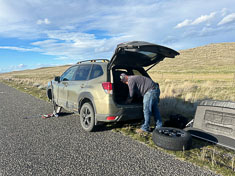
Darchelle could have changed the tire but we couldn't get far enough off the road for her to safely work on it so she got on her phone and looked up "roadside assistance".
Flat tire along Hwy 240, Richland
Retrieving the spare, Richland
Fixing the flat, Richland
Darchelle could have changed the tire but we couldn't get far enough off the road for her to safely work on it so she got on her phone and looked up "roadside assistance".
2/14/2026 Yard birds (link to here)
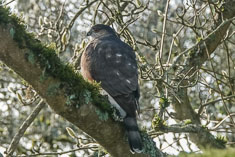
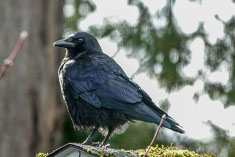
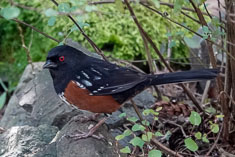 About a month after I posted these photos as I was preparing to write about them, I checked last
quarter's journal and came across a similar "Yard birds" entry from
last
December. The adult Sharp-shinned Hawk is almost certainly the same individual; they aren't
that common and the white spots on the back line up pretty well. The crow is one of several which
have been frequenting our yard since Darchelle began sprinkling mini-dog kibble on the patio table
every morning. In another month, the two pairs will fight fiercely for ownership of the table and
its treats but for now, all four scarf down the kibble together. The towhee, like me, is the
resident male, the difference between us being that the towhee is better-looking.
About a month after I posted these photos as I was preparing to write about them, I checked last
quarter's journal and came across a similar "Yard birds" entry from
last
December. The adult Sharp-shinned Hawk is almost certainly the same individual; they aren't
that common and the white spots on the back line up pretty well. The crow is one of several which
have been frequenting our yard since Darchelle began sprinkling mini-dog kibble on the patio table
every morning. In another month, the two pairs will fight fiercely for ownership of the table and
its treats but for now, all four scarf down the kibble together. The towhee, like me, is the
resident male, the difference between us being that the towhee is better-looking.
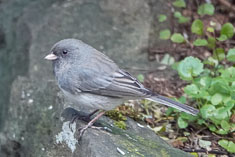
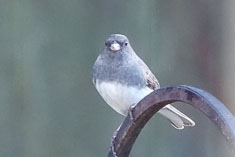
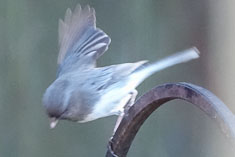 Also in last quarter's journal, I wrote at length (relatively speaking) about our back yard juncos.
On the 23rd
of November and again on 21 December I discuss Cassiar and Slate-colored Juncos with photos showing the range
of plumage variation in the Cassiars. My purpose was to clarify in my own mind the difference between
the two subspecies rather than to edify you, my gentle reader (yes, I watched Bridgerton
last night). Anyhow, last fall I concluded that our apparent Slate-colored individual was actually a
Cassiar, but in the last few days, a real Slate-colored Junco appears to have joined our
back yard L+ flock.
Pictured above, it has no trace of a hood and the line between chest and flanks is a smooth downward
curve. The tinge of brown on the back suggests that it is a female. The rounded tips of the white
outer tail feathers and the uniform gray color and condition of the primary and greater coverts
indicate an adult bird. The contrast between the faded brown primaries and the fresh gray
secondaries is apparently not useful in aging juncos. Since this bird is an adult and migratory
birds often return to the same location in successive winters, I had hoped to find photos of this
bird from the winter of 24-25 but our limited selection of photos was inconclusive.
Also in last quarter's journal, I wrote at length (relatively speaking) about our back yard juncos.
On the 23rd
of November and again on 21 December I discuss Cassiar and Slate-colored Juncos with photos showing the range
of plumage variation in the Cassiars. My purpose was to clarify in my own mind the difference between
the two subspecies rather than to edify you, my gentle reader (yes, I watched Bridgerton
last night). Anyhow, last fall I concluded that our apparent Slate-colored individual was actually a
Cassiar, but in the last few days, a real Slate-colored Junco appears to have joined our
back yard L+ flock.
Pictured above, it has no trace of a hood and the line between chest and flanks is a smooth downward
curve. The tinge of brown on the back suggests that it is a female. The rounded tips of the white
outer tail feathers and the uniform gray color and condition of the primary and greater coverts
indicate an adult bird. The contrast between the faded brown primaries and the fresh gray
secondaries is apparently not useful in aging juncos. Since this bird is an adult and migratory
birds often return to the same location in successive winters, I had hoped to find photos of this
bird from the winter of 24-25 but our limited selection of photos was inconclusive.
Sharp-shinned Hawk, Ravenna
American Crow, Ravenna
Spotted Towhee (oreganus), Ravenna
Slate-colored Junco, Ravenna
Slate-colored Junco, Ravenna
Slate-colored Junco, Ravenna
2/18/2026 Waterville Plateau (link to here)
Snoqualmie Pass was bare and dry with barely a foot of snowpack on the ledges along the road, including the two inches of new snow on the trees. From Easton east to Ryegrass Summit the ground was bare and the sky blue with fluffy gray-bottomed cumulus clouds. We looked for an Eared Grebe and called for Chukars at Vantage and searched for Eared Grebes among the Ruddy Ducks on ice-free Soap Lake but didn't pick up our first new bird until we started up the hill to the Dry Falls overlook. A Chukar was calling up on the rim of the breached anticline above the road. They've been hard to find in their usual Okanogan County hangouts so we were pleased to hear it.
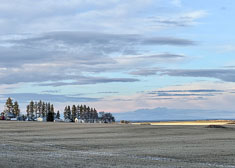
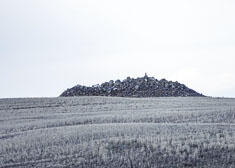
 Our next new bird was a Prairie Falcon, probably two of them we think, on rockpiles north of Atkins
Lake. The lake was dry and according to a local guy we talked to up north on H Road and 16 NE, the
two inches of snow on the ground is the most they've had all winter. He hadn't seen any Snowy Owls,
nor had we after searching Roads M, 2, 1 and L around Atkins Lake for the previous hour.
Our next new bird was a Prairie Falcon, probably two of them we think, on rockpiles north of Atkins
Lake. The lake was dry and according to a local guy we talked to up north on H Road and 16 NE, the
two inches of snow on the ground is the most they've had all winter. He hadn't seen any Snowy Owls,
nor had we after searching Roads M, 2, 1 and L around Atkins Lake for the previous hour.
Darchelle had been scoping a couple of raptors off to the west when the guy pulled up. One was bulky and brown with pale spots on the back. The other was similar in size but more sleek with unmarked dark gray upperparts - maybe a Gyr! We drove over there, flushing a couple of Gray Partridge on the way, but when we reached G Road we could find only the Red-tail and a Rough-leg.
On our way to the Inn at Gamble Sands for the night, $131 including tax, we detoured out to Bridgeport State Park and called up a couple of Saw-Whet Owls, our fourth new tick of the day.
Snoqualmie Pass was bare and dry with barely a foot of snowpack on the ledges along the road, including the two inches of new snow on the trees. From Easton east to Ryegrass Summit the ground was bare and the sky blue with fluffy gray-bottomed cumulus clouds. We looked for an Eared Grebe and called for Chukars at Vantage and searched for Eared Grebes among the Ruddy Ducks on ice-free Soap Lake but didn't pick up our first new bird until we started up the hill to the Dry Falls overlook. A Chukar was calling up on the rim of the breached anticline above the road. They've been hard to find in their usual Okanogan County hangouts so we were pleased to hear it.
Farm on Heritage Road, Waterville Plateau
Prairie Falcon on rockpile, Waterville Plateau
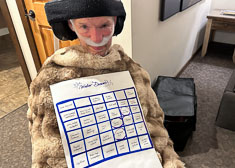
Selfie with bingo card, Brewster
Darchelle had been scoping a couple of raptors off to the west when the guy pulled up. One was bulky and brown with pale spots on the back. The other was similar in size but more sleek with unmarked dark gray upperparts - maybe a Gyr! We drove over there, flushing a couple of Gray Partridge on the way, but when we reached G Road we could find only the Red-tail and a Rough-leg.
On our way to the Inn at Gamble Sands for the night, $131 including tax, we detoured out to Bridgeport State Park and called up a couple of Saw-Whet Owls, our fourth new tick of the day.
2/19/2026 Waterville Snowy Owl (link to here)
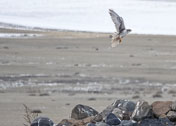
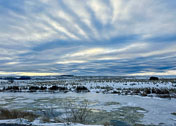 We left the Gamble Sands at 7:30AM, an early start for us. I saved twenty minutes by not using the
toilet, gambling that I could put it off until evening, and would have been fine had I not further
postponed pooping until after we went owling. I was pretty uncomfortable the last three hours and
enjoyed our fruitless attempt to find our first Okanogan County Western Screech Owl even less than I
do our usual owl outings.
We left the Gamble Sands at 7:30AM, an early start for us. I saved twenty minutes by not using the
toilet, gambling that I could put it off until evening, and would have been fine had I not further
postponed pooping until after we went owling. I was pretty uncomfortable the last three hours and
enjoyed our fruitless attempt to find our first Okanogan County Western Screech Owl even less than I
do our usual owl outings.
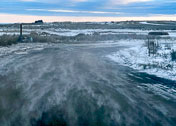
By getting up onto the Plateau early this morning, we hoped to spot Greater Sage Grouse displaying before they retired for the day but we didn't know exactly where to look for the lek. We scanned the stubble around last year's lek but no grouse were present. A stiff breeze from the north was sweeping skeins of snow down the road ahead of us and we wondered if perhaps the wind had discouraged the birds, or maybe we were just too late. Darchelle texted Shep, who had seen the birds four days earlier and reported them on Tweeters, for details but didn't hear back in time so we consoled ourselves with the thought that we could try again on Sunday.
We spent the rest of our day up on the plateau in a different sort of owl pursuit. We drove about 50 miles on mostly unpaved back roads through wheat and canola stubble, weedy grassland and remnant patches of sagebrush, stopping frequently so Darchelle could scan with binoculars or spotting scope for a roosting Snowy Owl. We heard that it was in the area a few days ago but it may have left because we could not find it despite systematically searching 20 or so square miles northeast of Mansfield and casually surveying additional areas southeast and north of town. Darchelle enjoys that sort of birding more than I do but the desolate landscape of faded yellows and brown with its sparse cover of windblown snow holds some appeal, at least for Horned Larks. We saw numerous flocks of 100 or more, mostly in the stubble fields.
Our best birds of the day were Snow Buntings and Lapland Longspurs, both associating with large flocks of Horned Larks. Neither species offered photo ops though Darchelle did get Merlin recordings of the longspurs.
We left the Plateau by mid-afternoon and after quick stops at Washburn Island and Monse for a few waterfowl, drove theCameron Lakes Road L+. There wasn't much snow but the lakes were all frozen. Birds were scarce.
Drifting snow, Cameron Lake Road
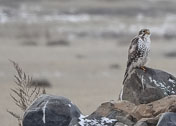
Prairie Falcon NE of Mansfield
Prairie Falcon NE of Mansfield
Frozen Lake, Cameron Lake Road
By getting up onto the Plateau early this morning, we hoped to spot Greater Sage Grouse displaying before they retired for the day but we didn't know exactly where to look for the lek. We scanned the stubble around last year's lek but no grouse were present. A stiff breeze from the north was sweeping skeins of snow down the road ahead of us and we wondered if perhaps the wind had discouraged the birds, or maybe we were just too late. Darchelle texted Shep, who had seen the birds four days earlier and reported them on Tweeters, for details but didn't hear back in time so we consoled ourselves with the thought that we could try again on Sunday.
We spent the rest of our day up on the plateau in a different sort of owl pursuit. We drove about 50 miles on mostly unpaved back roads through wheat and canola stubble, weedy grassland and remnant patches of sagebrush, stopping frequently so Darchelle could scan with binoculars or spotting scope for a roosting Snowy Owl. We heard that it was in the area a few days ago but it may have left because we could not find it despite systematically searching 20 or so square miles northeast of Mansfield and casually surveying additional areas southeast and north of town. Darchelle enjoys that sort of birding more than I do but the desolate landscape of faded yellows and brown with its sparse cover of windblown snow holds some appeal, at least for Horned Larks. We saw numerous flocks of 100 or more, mostly in the stubble fields.
Our best birds of the day were Snow Buntings and Lapland Longspurs, both associating with large flocks of Horned Larks. Neither species offered photo ops though Darchelle did get Merlin recordings of the longspurs.
We left the Plateau by mid-afternoon and after quick stops at Washburn Island and Monse for a few waterfowl, drove theCameron Lakes Road L+. There wasn't much snow but the lakes were all frozen. Birds were scarce.
2/20/2026 Havillah (link to here)
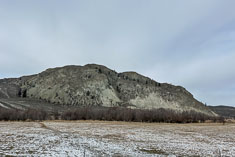
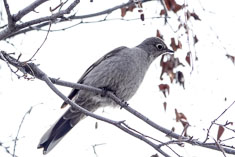
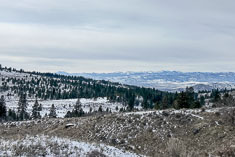 After a late start we spent much of the available daylight on Siwash Creek and North Siwash Creek Roads,
stopping frequently to stir up the small forest birds with calls of Northern Pygmy Owl and White-winged
Crossbills with an occasional interlude of mobbing Black-capped Chickadees. We saw lots of Crossbills
(but none that we could identify as White-winged) and three different Pygmy Owls. Of the little birds,
several were new for the year but we failed to find the winter finches - Redpolls, Rosy-finches and the
crossbills - for which the Highlands are famous. We didn't find any grouse either, but they are tough
when there isn't much snow. Even at the Havillah Sno-Park (3900') the snow was less than six inches deep,
including a couple inches from a day or three ago.
After a late start we spent much of the available daylight on Siwash Creek and North Siwash Creek Roads,
stopping frequently to stir up the small forest birds with calls of Northern Pygmy Owl and White-winged
Crossbills with an occasional interlude of mobbing Black-capped Chickadees. We saw lots of Crossbills
(but none that we could identify as White-winged) and three different Pygmy Owls. Of the little birds,
several were new for the year but we failed to find the winter finches - Redpolls, Rosy-finches and the
crossbills - for which the Highlands are famous. We didn't find any grouse either, but they are tough
when there isn't much snow. Even at the Havillah Sno-Park (3900') the snow was less than six inches deep,
including a couple inches from a day or three ago.
The Sno-Park lot was quiet, though I happened to be looking when a blue-gray adult American Goshawk sailed through an opening in the trees and disappeared. It's wings fixed in a fast glide, the heavy bird was visible for maybe half a second. I directed Darchelle on a short stroll into the woods where I thought it might have paused on a perch but it was characteristically gone. On our way back out to Havillah Road we stopped to call another Pygmy Owl and while it was calling back, Todd drove up and stopped to ask if we'd seen any birds. He recognized us, he realized, when we got to talking about the Great Gray Owl we'd seen at that spot three years ago. He invited us to stop by his house, the first one on the left on North Siwash Creek Road, sometime, then continued up to the Sno-Park for a ski tour before dark.
Golden Eagle cliff, Fancher Flats
Townsend's Solitaire, Siwash Creek Road
View west, North Siwash Creek Road
The Sno-Park lot was quiet, though I happened to be looking when a blue-gray adult American Goshawk sailed through an opening in the trees and disappeared. It's wings fixed in a fast glide, the heavy bird was visible for maybe half a second. I directed Darchelle on a short stroll into the woods where I thought it might have paused on a perch but it was characteristically gone. On our way back out to Havillah Road we stopped to call another Pygmy Owl and while it was calling back, Todd drove up and stopped to ask if we'd seen any birds. He recognized us, he realized, when we got to talking about the Great Gray Owl we'd seen at that spot three years ago. He invited us to stop by his house, the first one on the left on North Siwash Creek Road, sometime, then continued up to the Sno-Park for a ski tour before dark.
2/21/2026 Highlands redux (link to here)
I described our birding achievements today in an email reply to Ed and Delia this evening.
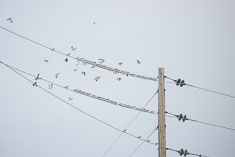
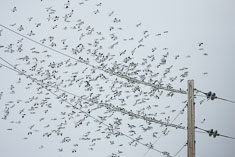
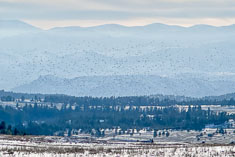
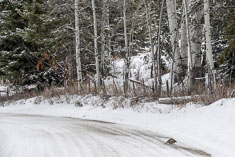
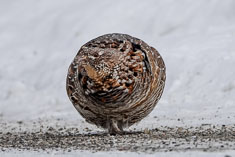
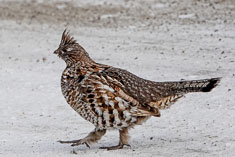
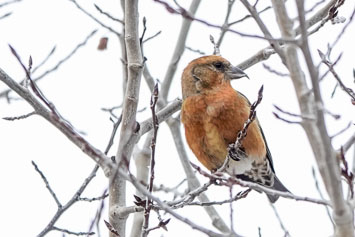
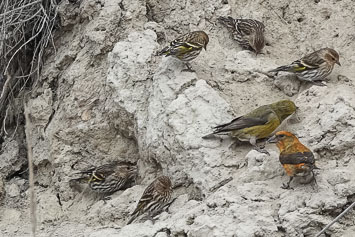 We did have a good time today. We found lots of Pine Siskins and Red Crossbills on
Swainson's Mill Road L+
below Havillah, then drove over the hill to Molson L+ via Davies Road L+ where we bumped into the Ruffie. The snow along Davies Road (4400'),
while probably twice as deep as over at Havillah, still wasn't enough to bury a grouse. Or a
Coyote. We saw more Coyotes in the Highlands on this trip than we have on any other. Perhaps the local
ranchers have stopped shooting at them (not likely) or maybe the lower snowpack is allowing them
to winter higher up in the hills than usual.
We did have a good time today. We found lots of Pine Siskins and Red Crossbills on
Swainson's Mill Road L+
below Havillah, then drove over the hill to Molson L+ via Davies Road L+ where we bumped into the Ruffie. The snow along Davies Road (4400'),
while probably twice as deep as over at Havillah, still wasn't enough to bury a grouse. Or a
Coyote. We saw more Coyotes in the Highlands on this trip than we have on any other. Perhaps the local
ranchers have stopped shooting at them (not likely) or maybe the lower snowpack is allowing them
to winter higher up in the hills than usual.
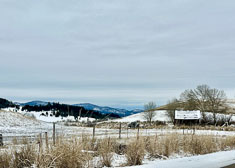
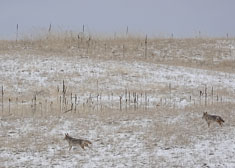
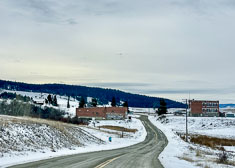 We took Mary Ann Creek
Road L+ down to Chesaw (3000') then drove north on Bolster Road towards Canada. Khanh had
suggested we might find Common Redpolls in the alders along Bolster Road L+, but we didn't even find the much more common Pine
Siskins in those, or any other, alders; the Siskins were all in larches and the cone-laden crowns of
the spruce trees.
We took Mary Ann Creek
Road L+ down to Chesaw (3000') then drove north on Bolster Road towards Canada. Khanh had
suggested we might find Common Redpolls in the alders along Bolster Road L+, but we didn't even find the much more common Pine
Siskins in those, or any other, alders; the Siskins were all in larches and the cone-laden crowns of
the spruce trees.
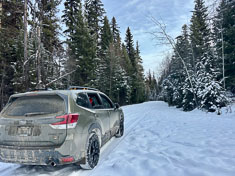 The drive on snow-covered FR 3575 L+ over the mountains to Toroda Creek was close as Darchelle and I get to
cross-country skiing. At 4300' the high point on FR 3575 is slightly lower than Davies Road and
about 400' higher than the Sno-Park but the forest seemed drier than either of those locations, with
less spruce and more Douglas Fir. I was pleased that Darchelle got to see a Goshawk of her own. I
was also relieved when we got down to Toroda Creek Road and back to civilization, where a breakdown
probably wouldn't be fatal.
The drive on snow-covered FR 3575 L+ over the mountains to Toroda Creek was close as Darchelle and I get to
cross-country skiing. At 4300' the high point on FR 3575 is slightly lower than Davies Road and
about 400' higher than the Sno-Park but the forest seemed drier than either of those locations, with
less spruce and more Douglas Fir. I was pleased that Darchelle got to see a Goshawk of her own. I
was also relieved when we got down to Toroda Creek Road and back to civilization, where a breakdown
probably wouldn't be fatal.
I described our birding achievements today in an email reply to Ed and Delia this evening.
Today we returned to the Highlands, still looking for those elusive winter finches. Sadly all our
crossbills were officially, if not cosmetically, Red and none of our little finches had red polls,
whatever those are. We nonetheless added four birds for the year today, none of which was an owl.
Clark's Nutcracker we expected; Pileated Woodpecker we did not, so we played White-headed,
Three-toed, Hairy and finally Williamson's Sapsucker to lure the invisible tapper out from behind
its tree. The big woodpecker apparently tired of keeping company with its chatty relatives and flew
visibly off into the woods. I'd expected to get skunked today so it was nice to pick up two species
on our first checklist of the morning.
Snow Buntings, Havillah
Snow Buntings, Havillah
Snow Buntings, Havillah
Above Havillah there was something wrong with the phone lines - it was as if they'd been coated with
lumpy, almost prickly looking insulation. As we approached, the "insulation" spontaneously peeled
off and shredded into about 400 black and white, bird-sized particles. I'd seen Snow Buntings perch
in trees but never lined up on wire like blackbirds.
Ruffed Grouse on Davies Road, Okanogan Highlands
Ruffed Grouse on Davies Road, Okanogan Highlands
Ruffed Grouse on Davies Road, Okanogan Highlands
They weren't new for the year because we'd seen a few Thursday on the Waterville, but ten minutes
later I'd just asked Darchelle to pull over to listen, ok play, for a Great Gray Owl when I noticed
a lump in the road thirty feet in front of us and realized it was a Ruffed Grouse hunched over
collecting rocks. It allowed us to get within about 10 feet before stepping gingerly across the
road, like someone unaccustomed to walking barefoot, and flying off into the woods.
We wrapped up the day by driving for two hours between Chesaw and Toroda on a snow-covered road so remote that at one point we were only a quarter mile from Canada. There were other tire tracks in the snow, which at one point was 20cm deep (we were that close to Canada), but for maybe seven miles of the route, no one else had driven that way for at least two days. If something had gone wrong with our car, I would have died sometime tomorrow morning. Of course, maybe I will anyhow, so there's that. Nothing went wrong; Darchelle saw another Goshawk and we think we heard a Pine Grosbeak calling in the woods. Darchelle recorded it for further analysis, which unfortunately revealed that it was a Mountain Chickadee.
My catch-up bird was a Wilson's Snipe half-submerged in a small patch of open water along the far shore of an otherwise frozen lake. Darchelle had seen a couple at Piano Ranch in January while I was keeping warm in the car but today's Snipe was new for me.
In short, we're having a wonderful time in chilly northern Washington and wishing you were here to enjoy dipping on all those winter finches with us.
We wrapped up the day by driving for two hours between Chesaw and Toroda on a snow-covered road so remote that at one point we were only a quarter mile from Canada. There were other tire tracks in the snow, which at one point was 20cm deep (we were that close to Canada), but for maybe seven miles of the route, no one else had driven that way for at least two days. If something had gone wrong with our car, I would have died sometime tomorrow morning. Of course, maybe I will anyhow, so there's that. Nothing went wrong; Darchelle saw another Goshawk and we think we heard a Pine Grosbeak calling in the woods. Darchelle recorded it for further analysis, which unfortunately revealed that it was a Mountain Chickadee.
My catch-up bird was a Wilson's Snipe half-submerged in a small patch of open water along the far shore of an otherwise frozen lake. Darchelle had seen a couple at Piano Ranch in January while I was keeping warm in the car but today's Snipe was new for me.
In short, we're having a wonderful time in chilly northern Washington and wishing you were here to enjoy dipping on all those winter finches with us.
Red Crossbill in aspen, Havillah
Pine Siskins and Red Crossbills eating clay, Havillah
Homestead on Havillah Road, Okanogan Highlands
Coyotes, Davies Road
Road into town, Molson
The Wilderness on FR 3575, Okanogan Highlands
2/22/2026 Big Birds (link to here)
We checked out (figuratively speaking, since you apparently don't have to stop by the front desk anymore) of the Omak Best Western at 7AM as the edges of the clouds overhead were turning pink. For $500 we'd spent three comfortable nights in a second-floor room with a bed that felt much like ours at home. The toilet was a bit low and tight but we managed well enough. After the first morning we passed on the breakfast; they'd had bacon, which I liked but it had tasted like cleaning fluid, which I didn't like. The coffee from the machine downstairs was OK but not as good as our two-day-old leftovers from home. The chili rellenos from the Mexican restaurant on the corner were more mediocre than I remembered.
What a treat to be out early! The morning sun illuminated snow-covered hills and snow-free benches alike above the Okanogan River as we drove south towards Brewster and the Waterville Plateau. I persuaded Darchelle to stop for five minutes at the Monse Bridge L+ to try for the Swamp Sparrow again. The north wind had packed the little cove at the boat launch with slush which had congealed into rugose blue-green ice, no doubt still too thin to walk on though I would certainly have tested it back in the day. I don't think Darchelle was tempted. Despite the chill the birds were singing vigorously - Red-winged Blackbirds, a Bewick's Wren, American Robins and Song Sparrows. She contributed a few Swamp Sparrow chips to the chorus and the bird we sought called back, not very loud but clear enough for Merlin to pick it up and us to identify it.
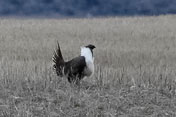
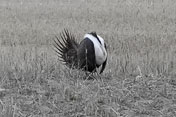
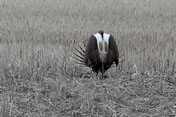 The Plateau was quiet, the bird activity subdued perhaps by the sombre sheet of gray stratus
encroaching on the bright sky overhead. Clean white drifts like teeth bit into the gravel bed of
the road before us but whatever snow had fallen in the past two days had done nothing for the
snowpack; the stubble fields were still half bare. At the old lek we saw no birds but a half mile
down the road we spotted two dark tumbleweeds 150 yards out in the wheat stubble. They were not
tumbleweeds but big birds. They were Sage Grouse!
The Plateau was quiet, the bird activity subdued perhaps by the sombre sheet of gray stratus
encroaching on the bright sky overhead. Clean white drifts like teeth bit into the gravel bed of
the road before us but whatever snow had fallen in the past two days had done nothing for the
snowpack; the stubble fields were still half bare. At the old lek we saw no birds but a half mile
down the road we spotted two dark tumbleweeds 150 yards out in the wheat stubble. They were not
tumbleweeds but big birds. They were Sage Grouse!
Darchelle watched them huff around for a few minutes then repositioned the car and held binoculars for me so I could see them too. With his dark tail splayed in a spiky halo, the male grouse thrusts his yellow air sacs like oversized breasts out from under the fluffy white cape draped around his neck and chest, pauses as if to assess the response of his audience then does it again. Female grouse, like male humans, apparently find breasts of the opposite sex exciting, perhaps even beautiful. Not all were displaying but we counted five males in the area before we left to look for the next big thing - a Snowy Owl.
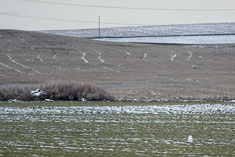
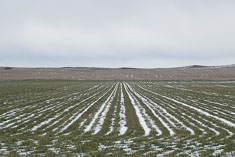
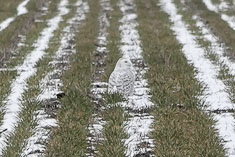 Although not optimistic about our chances, I was willing to invest a couple of hours in what would
probably be our final Snowy Owl search of the year. I told Darchelle I wanted to be heading off the
Plateau by 11. She spotted our 2026 Snowy Owl 250 yards out in a frozen field of green wheat at
11:01. "I've got one", she quietly announced. "You're shittin' me" I replied. I felt as though I
was channeling my friend Donna's not quite ex-husband Wayne - it's a phrase that often pops up in his
stories and I could almost hear his Maine accent as I said it. But Darchelle wasn't shittin' me. She
turned the car so I could see the big bird, as round and white as a melting snowman out in its field,
then we spent the next 40 minutes getting photos, pinpointing its location and sharing the news.
Here's our checklist L+.
Although not optimistic about our chances, I was willing to invest a couple of hours in what would
probably be our final Snowy Owl search of the year. I told Darchelle I wanted to be heading off the
Plateau by 11. She spotted our 2026 Snowy Owl 250 yards out in a frozen field of green wheat at
11:01. "I've got one", she quietly announced. "You're shittin' me" I replied. I felt as though I
was channeling my friend Donna's not quite ex-husband Wayne - it's a phrase that often pops up in his
stories and I could almost hear his Maine accent as I said it. But Darchelle wasn't shittin' me. She
turned the car so I could see the big bird, as round and white as a melting snowman out in its field,
then we spent the next 40 minutes getting photos, pinpointing its location and sharing the news.
Here's our checklist L+.
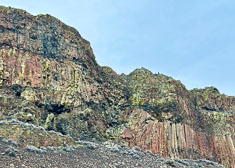
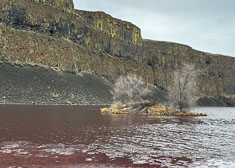
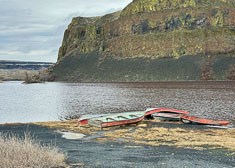 We drove off the Plateau via US 2 West with a stop at Moses Coulee to look for Gray-crowned Rosy
Finches in the cliffs on the way up to Jameson Lake L+. The only birds we saw around the cliffs were Rock Pigeons. The
lake was partly frozen and both the ice and the open water were the color of blood, courtesy of an
algae bloom which according to one report, may be associated with the spring lake turnover.
We drove off the Plateau via US 2 West with a stop at Moses Coulee to look for Gray-crowned Rosy
Finches in the cliffs on the way up to Jameson Lake L+. The only birds we saw around the cliffs were Rock Pigeons. The
lake was partly frozen and both the ice and the open water were the color of blood, courtesy of an
algae bloom which according to one report, may be associated with the spring lake turnover.
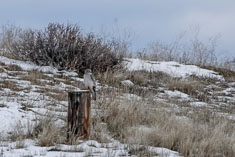
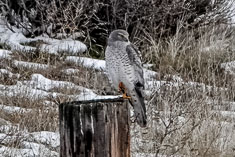
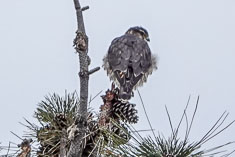 Leaving Moses Coulee we stopped up near the west rim because I thought the birds I saw fly up from
from the side of the road might have been Rosy-Finches. When Darchelle went to look for them she
flushed a couple of Gray Partridge, only our second sighting of the trip. She couldn't find any
Rosy-Finches but did see a Horned Lark where the maybe-finches had been. We stopped again coming
into Waterville to photograph a Northern Harrier on a post, and yet again in town for a Merlin, and
then a Sharpie. In Leavenworth on the private road across Icicle Creek from the boat launch (which
was gated) Darchelle called up a White-headed Woodpecker, our last new year bird of the trip. The
water in Icicle Creek was green and so clear that I dreamed about it that night.
Leaving Moses Coulee we stopped up near the west rim because I thought the birds I saw fly up from
from the side of the road might have been Rosy-Finches. When Darchelle went to look for them she
flushed a couple of Gray Partridge, only our second sighting of the trip. She couldn't find any
Rosy-Finches but did see a Horned Lark where the maybe-finches had been. We stopped again coming
into Waterville to photograph a Northern Harrier on a post, and yet again in town for a Merlin, and
then a Sharpie. In Leavenworth on the private road across Icicle Creek from the boat launch (which
was gated) Darchelle called up a White-headed Woodpecker, our last new year bird of the trip. The
water in Icicle Creek was green and so clear that I dreamed about it that night.
On Stevens Pass the sagging snowpack had the same sodden look as at Snoqualmie Pass but was, at two feet, twice as deep.
We checked out (figuratively speaking, since you apparently don't have to stop by the front desk anymore) of the Omak Best Western at 7AM as the edges of the clouds overhead were turning pink. For $500 we'd spent three comfortable nights in a second-floor room with a bed that felt much like ours at home. The toilet was a bit low and tight but we managed well enough. After the first morning we passed on the breakfast; they'd had bacon, which I liked but it had tasted like cleaning fluid, which I didn't like. The coffee from the machine downstairs was OK but not as good as our two-day-old leftovers from home. The chili rellenos from the Mexican restaurant on the corner were more mediocre than I remembered.
What a treat to be out early! The morning sun illuminated snow-covered hills and snow-free benches alike above the Okanogan River as we drove south towards Brewster and the Waterville Plateau. I persuaded Darchelle to stop for five minutes at the Monse Bridge L+ to try for the Swamp Sparrow again. The north wind had packed the little cove at the boat launch with slush which had congealed into rugose blue-green ice, no doubt still too thin to walk on though I would certainly have tested it back in the day. I don't think Darchelle was tempted. Despite the chill the birds were singing vigorously - Red-winged Blackbirds, a Bewick's Wren, American Robins and Song Sparrows. She contributed a few Swamp Sparrow chips to the chorus and the bird we sought called back, not very loud but clear enough for Merlin to pick it up and us to identify it.
Greater Sage Grouse, Waterville Plateau
Greater Sage Grouse, Waterville Plateau
Greater Sage Grouse, Waterville Plateau
Greater Sage Grouse, Waterville Plateau
Darchelle watched them huff around for a few minutes then repositioned the car and held binoculars for me so I could see them too. With his dark tail splayed in a spiky halo, the male grouse thrusts his yellow air sacs like oversized breasts out from under the fluffy white cape draped around his neck and chest, pauses as if to assess the response of his audience then does it again. Female grouse, like male humans, apparently find breasts of the opposite sex exciting, perhaps even beautiful. Not all were displaying but we counted five males in the area before we left to look for the next big thing - a Snowy Owl.
Snowy Owl near Atkins Lake, Waterville Plateau
Snowy Owl field, Waterville Plateau
Snowy Owl on snow, Waterville Plateau
Cliffs, Moses Coulee
Island and red water, Jameson Lake
Boats, Jameson Lake
Northern Harrier along US 2, Waterville
Northern Harrier (male), Waterville Plateau
Merlin, Waterville
On Stevens Pass the sagging snowpack had the same sodden look as at Snoqualmie Pass but was, at two feet, twice as deep.
2/26/2026 Glaucous Gull (link to here)
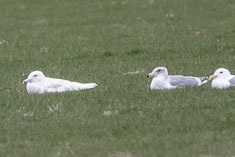 I had some reservations about this bird when it was first reported about two weeks ago just east of
Sumas along the Canadian border. The iris seemed too dark and the tip of the bill not dark enough
for a 2W Glaucous Gull so when none of the sightings were approved in eBird, we decided not to chase
it, despite Glaucous Gull being high on our list of priorities for the year. To me, the bird looked
like the "White Gull" that we saw in Burlington five years ago, which I see has now quietly morphed back into a bona fide Glaucous
Gull, at least on some checklists. Anyhow yesterday I noticed that the Sumas gull sightings had all
been approved so this afternoon we made the pilgrimmage ourselves. We were just in time; it flew off
five minutes after we spotted it.
I had some reservations about this bird when it was first reported about two weeks ago just east of
Sumas along the Canadian border. The iris seemed too dark and the tip of the bill not dark enough
for a 2W Glaucous Gull so when none of the sightings were approved in eBird, we decided not to chase
it, despite Glaucous Gull being high on our list of priorities for the year. To me, the bird looked
like the "White Gull" that we saw in Burlington five years ago, which I see has now quietly morphed back into a bona fide Glaucous
Gull, at least on some checklists. Anyhow yesterday I noticed that the Sumas gull sightings had all
been approved so this afternoon we made the pilgrimmage ourselves. We were just in time; it flew off
five minutes after we spotted it.
Glaucous Gull, Sumas
2/28/2026 Stats (link to here)
During February we spent all or part of 10 days in the field, submitted 63 complete checklists (115 ytd) and saw or heard 124 species. Of those 45 were new for our our Washington 2026 list giving us a total of 185 for the year to date, 12 short of our tally one year ago. We slept eight nights away from home.
During February we spent all or part of 10 days in the field, submitted 63 complete checklists (115 ytd) and saw or heard 124 species. Of those 45 were new for our our Washington 2026 list giving us a total of 185 for the year to date, 12 short of our tally one year ago. We slept eight nights away from home.
3/01/2026 Walla Walla (link to here)
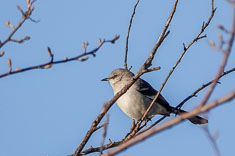
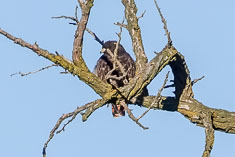 Despite staying up past midnight we arose at sunrise and left the house 15 minutes later to look for
a Northern Mockingbird discovered two days ago in a mobile home park four miles away. It was still
hanging out where it was first seen, and looking quite at home.
Despite staying up past midnight we arose at sunrise and left the house 15 minutes later to look for
a Northern Mockingbird discovered two days ago in a mobile home park four miles away. It was still
hanging out where it was first seen, and looking quite at home.
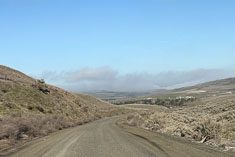
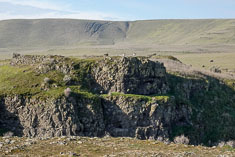
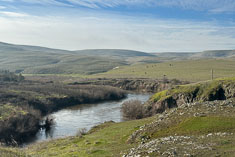 With two hours to burn we drove over to Byrnes Road L+ near Touchet (pronounced Toochee) and found lots of Red-tailed Hawks.
We also found a Prairie Falcon, a bird which like the Northern Mockingbird, we've only seen three times
in the past six years in Walla Walla County.
With two hours to burn we drove over to Byrnes Road L+ near Touchet (pronounced Toochee) and found lots of Red-tailed Hawks.
We also found a Prairie Falcon, a bird which like the Northern Mockingbird, we've only seen three times
in the past six years in Walla Walla County.
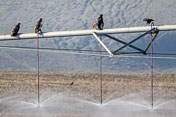
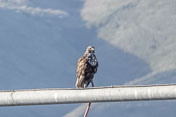
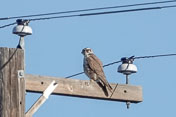
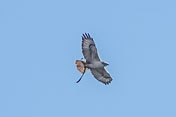 From Byrne's Road we drove up Nine Mile Canyon L+ to see if the Ferruginous Hawk which nests in the canyon had
returned from its winter vacation. It had; I didn't see it because without neck muscles I can't tip
my head back to look up at the sky but Darchelle got a few photos. We initially dismissed it as a
Red-tail because of the heavily-marked wings and pale orange tail. Even Merlin thought it might be
a Red-tail. After examining the photos we recognized it as a Ferruginous by the unmarked white
belly, the absence of dark patagial marks and the dark rust-colored legs. Also suggesting Ferruginous
are the pale windows near the wingtips formed by P3-7, the gray face and the pale throat.
From Byrne's Road we drove up Nine Mile Canyon L+ to see if the Ferruginous Hawk which nests in the canyon had
returned from its winter vacation. It had; I didn't see it because without neck muscles I can't tip
my head back to look up at the sky but Darchelle got a few photos. We initially dismissed it as a
Red-tail because of the heavily-marked wings and pale orange tail. Even Merlin thought it might be
a Red-tail. After examining the photos we recognized it as a Ferruginous by the unmarked white
belly, the absence of dark patagial marks and the dark rust-colored legs. Also suggesting Ferruginous
are the pale windows near the wingtips formed by P3-7, the gray face and the pale throat.
The next morning we returned to Nine Mile Canyon L+ so I could try to get the Ferruginous Hawk, and to look for the Loggerhead Shrike which shows up in the canyon around the end of February. I saw the Ferruginous but the shrike we found in the canyon, about two miles up, was not the Loggerhead but a Northern.
Mockingbird habitat, Walla Walla
Northern Mockingbird, Walla Walla
Red-tailed Hawk (dark phase), Walla Walla
Byrne's Road
Canada Geese, Byrne's Road
Walla Walla River, Byrne's Road
Red-tailed Hawks, Byrne's Road
Red-tailed (?) Hawk, Byrne's Road
Prairie Falcon, Byrne's Road
Ferruginous Hawk, Nine Mile Canyon
The next morning we returned to Nine Mile Canyon L+ so I could try to get the Ferruginous Hawk, and to look for the Loggerhead Shrike which shows up in the canyon around the end of February. I saw the Ferruginous but the shrike we found in the canyon, about two miles up, was not the Loggerhead but a Northern.
3/04/2026 Visiting (link to here)
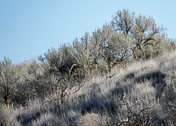
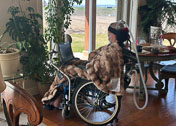
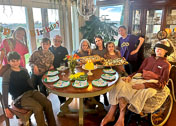 Our first two mornings we went out birding early since Donna had Lupe and Jenn respectively coming
in to get her up and ready for the day. Both times we found ourselves at Nine Mile
Canyon where both times we missed the Loggerhead Shrike. The rest of the day I generally spent
hanging out in my wheelchair by the living room windows using my eye-gaze laptop to read books and
write an email or two. On our third day Darchelle helped our nieces redesign their bedroom and
discovered that our (relatively) new Subaru was leaking oil. The oil leak helped us to decide to
stay an extra day and Les Schwab helped us to decide what to do about it - remove the extra
washer/gasket from the oil drain plug. Staying an extra day also meant we were on hand to help
celebrate Sally's birthday.
Our first two mornings we went out birding early since Donna had Lupe and Jenn respectively coming
in to get her up and ready for the day. Both times we found ourselves at Nine Mile
Canyon where both times we missed the Loggerhead Shrike. The rest of the day I generally spent
hanging out in my wheelchair by the living room windows using my eye-gaze laptop to read books and
write an email or two. On our third day Darchelle helped our nieces redesign their bedroom and
discovered that our (relatively) new Subaru was leaking oil. The oil leak helped us to decide to
stay an extra day and Les Schwab helped us to decide what to do about it - remove the extra
washer/gasket from the oil drain plug. Staying an extra day also meant we were on hand to help
celebrate Sally's birthday.
Northern Shrike, Nine Mile Canyon
My usual location, Walla Walla
Oil drain plug
Birthday party, Walla Walla
3/05/2026 The Gorge (link to here)
Back on the road again this morning after four days and five nights with Darchelle's family in Walla Walla. The weather was sunny after the morning overcast drifted off to the east and temperatures were in the mid-50s as we drove east through the Gorge, though a brisk southwesterly breeze swept whitecaps upriver all afternoon. A blanket of fluffy stratocumulus pushed up against the crest and curled around the peak of Mount Hood, dragging curtains of rain almost to Stevenson but without much conviction. When we reached the Best Western Plus in Camas, the pavement was wet but the clouds had broken up.
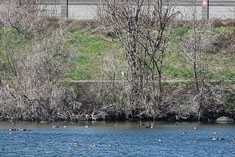 Leaving Walla Walla we stopped by Nine Mile Canyon and again found a Northern Shrike instead of the
Loggerhead. Continuing up to Tri-Cities to look for a Black-crowned Night Heron, a tick I did not
want to leave without, we tried Riverview Park L+, which we had had known as the Animal Shelter pond when we
looked for Night Herons there a few years ago. Darchelle scoped the shoreline cattails and willow
thickets from the access road for about 15 minutes before she spotted four of the herons at the far
(north) end of the pond. I was able to pick them out with the opera glasses once she told me where
to look. I was pleased to get them; they may well be the only ones I see all year.
Leaving Walla Walla we stopped by Nine Mile Canyon and again found a Northern Shrike instead of the
Loggerhead. Continuing up to Tri-Cities to look for a Black-crowned Night Heron, a tick I did not
want to leave without, we tried Riverview Park L+, which we had had known as the Animal Shelter pond when we
looked for Night Herons there a few years ago. Darchelle scoped the shoreline cattails and willow
thickets from the access road for about 15 minutes before she spotted four of the herons at the far
(north) end of the pond. I was able to pick them out with the opera glasses once she told me where
to look. I was pleased to get them; they may well be the only ones I see all year.
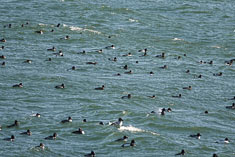 We considered heading home but decided instead to try for a couple of birds reported in the Columbia
Gorge then stay at the Best Western in Camas so we could visit Ridgefield NWR in the morning.
Darchelle particularly likes Ridgefield but if we go there from home we don't usually get there
until early afternoon. We took SR 14 all the way through the gorge, a nice change from our usual
route west on I-84 from Hermiston to Hood River on the Oregon side. We stopped in
Roosevelt L+ in
Klickitat County and I sat in the car for an hour while Darchelle searched through a flock of close
to 1000 ducks looking for a Tufted Duck. She didn't find one but several of the other ducks were
new for our Klickitat County list.
We considered heading home but decided instead to try for a couple of birds reported in the Columbia
Gorge then stay at the Best Western in Camas so we could visit Ridgefield NWR in the morning.
Darchelle particularly likes Ridgefield but if we go there from home we don't usually get there
until early afternoon. We took SR 14 all the way through the gorge, a nice change from our usual
route west on I-84 from Hermiston to Hood River on the Oregon side. We stopped in
Roosevelt L+ in
Klickitat County and I sat in the car for an hour while Darchelle searched through a flock of close
to 1000 ducks looking for a Tufted Duck. She didn't find one but several of the other ducks were
new for our Klickitat County list.
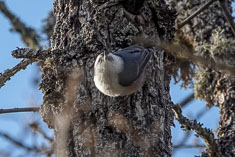
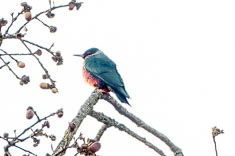
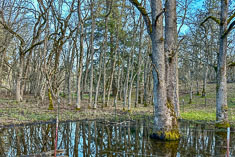 Just west of Lyle we took old Highway 8 to Balch Road L+ to look for our next two birds - Acorn and
Lewis's Woodpeckers. We found both almost immediately. While we were parked in the middle of the
road a white pickup came down the hill and paused for us got out of his way. When he stopped next
to us we thought he was going to scold us but instead he asked what we were looking at. "Birds",
Darchelle told him. "This is our favorite spot for Lewis's and Acorn Woodpeckers, she explained.
He already knew about the woodpeckers. "My mother is a birdwatcher", he told us. "You might know
her - Ann Marie W?" We do know
her; she has done pelagic trips with us and we've run into her in the field multiple times. The man
in the pickup was her son Glen. We had known that Ann Marie had cancer; Glen told us that she was
nearing the end, no longer eating but just taking water, and that he was heading up to see her.
Before he left he invited us to stop by and visit him sometime, and also that there was an Acorn
Woodpecker up the right fork of the "Y" beyond the lake. We looked for that one and heard it but
by that point had already seen one in the oaks at the crest of the hill, just before the
schoolhouse.
Just west of Lyle we took old Highway 8 to Balch Road L+ to look for our next two birds - Acorn and
Lewis's Woodpeckers. We found both almost immediately. While we were parked in the middle of the
road a white pickup came down the hill and paused for us got out of his way. When he stopped next
to us we thought he was going to scold us but instead he asked what we were looking at. "Birds",
Darchelle told him. "This is our favorite spot for Lewis's and Acorn Woodpeckers, she explained.
He already knew about the woodpeckers. "My mother is a birdwatcher", he told us. "You might know
her - Ann Marie W?" We do know
her; she has done pelagic trips with us and we've run into her in the field multiple times. The man
in the pickup was her son Glen. We had known that Ann Marie had cancer; Glen told us that she was
nearing the end, no longer eating but just taking water, and that he was heading up to see her.
Before he left he invited us to stop by and visit him sometime, and also that there was an Acorn
Woodpecker up the right fork of the "Y" beyond the lake. We looked for that one and heard it but
by that point had already seen one in the oaks at the crest of the hill, just before the
schoolhouse.
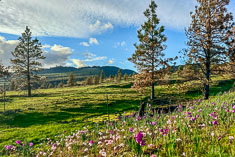 A few miles down the road we ran into flowers, a showy display of Douglas Grass-widows growing in
the thin soil of basalt outcrops near the Catherine Creek trailhead. Their pink and magenta blooms
were catching the afternoon light, nodding in the breeze against a rich emerald backdrop of spring
grass and moss. "They would make stunning photos for the journal", I thought, then immediately felt
sad, or maybe hopeless, as if there were no point in stopping, no point in attempting to capture
their beauty, to learn their name and research their place in the pine-oak woodland and meadow
community of the central gorge.
A few miles down the road we ran into flowers, a showy display of Douglas Grass-widows growing in
the thin soil of basalt outcrops near the Catherine Creek trailhead. Their pink and magenta blooms
were catching the afternoon light, nodding in the breeze against a rich emerald backdrop of spring
grass and moss. "They would make stunning photos for the journal", I thought, then immediately felt
sad, or maybe hopeless, as if there were no point in stopping, no point in attempting to capture
their beauty, to learn their name and research their place in the pine-oak woodland and meadow
community of the central gorge.
But I did ask Darchelle to stop and take a few photos, an act of hope on my part and help on hers. I would have liked to get photos of the half dozen other flowers blooming in crevices in the basalt roadcuts we passed in the next mile or so but there was no place to stop and I had already blown my wad of courage, or hope, or whatever it is that keeps me spitting in the face of this disease, so I didn't ask.
Back on the road again this morning after four days and five nights with Darchelle's family in Walla Walla. The weather was sunny after the morning overcast drifted off to the east and temperatures were in the mid-50s as we drove east through the Gorge, though a brisk southwesterly breeze swept whitecaps upriver all afternoon. A blanket of fluffy stratocumulus pushed up against the crest and curled around the peak of Mount Hood, dragging curtains of rain almost to Stevenson but without much conviction. When we reached the Best Western Plus in Camas, the pavement was wet but the clouds had broken up.
Black-crowned Night Heron, Riverview Park Pasco
Scaup and Goldeneyes, Roosevelt
White-breasted Nuthatch, Balch Road
Lewis's Woodpecker, Balch Road
Oak woodland, Balch Road
Douglas Grass-widows, Catharine Creek
But I did ask Darchelle to stop and take a few photos, an act of hope on my part and help on hers. I would have liked to get photos of the half dozen other flowers blooming in crevices in the basalt roadcuts we passed in the next mile or so but there was no place to stop and I had already blown my wad of courage, or hope, or whatever it is that keeps me spitting in the face of this disease, so I didn't ask.
3/06/2026 Ridgefield (link to here)
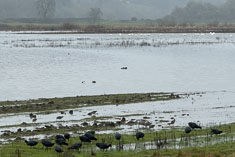
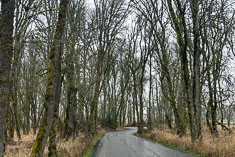
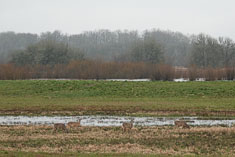 The Best Western in Camas was cheaper but less inviting than I remembered from a year ago. The
toilet was a little low and the bed a little high but we slept well enough. Remembering the bacon
from Omak I passed on breakfast, but remembering my bloating all day yesterday after not taking
the time to poop in the morning, I didn't pass on the toilet before we left for Ridgefield.
The Best Western in Camas was cheaper but less inviting than I remembered from a year ago. The
toilet was a little low and the bed a little high but we slept well enough. Remembering the bacon
from Omak I passed on breakfast, but remembering my bloating all day yesterday after not taking
the time to poop in the morning, I didn't pass on the toilet before we left for Ridgefield.
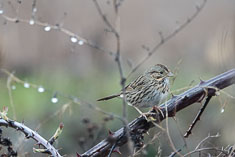
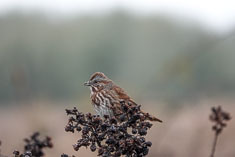 We spent most of the day driving around the refuge and accumulated a list of over 60 species L+. It rained all day but often barely
more than mist in the air, enough to deter most of the other birders but not enough to shut down
the birds. Darchelle was concerned that I didn't enjoy the birding much but I told her I had a
pretty good time. Both physically and emotionally I was more comfortable than yesterday so that
helped. I only missed one bird, a Hermit Thrush along the entrance road which I couldn't hear, and
most of the others I was at least able to identify on my own, that is, without optics.
We spent most of the day driving around the refuge and accumulated a list of over 60 species L+. It rained all day but often barely
more than mist in the air, enough to deter most of the other birders but not enough to shut down
the birds. Darchelle was concerned that I didn't enjoy the birding much but I told her I had a
pretty good time. Both physically and emotionally I was more comfortable than yesterday so that
helped. I only missed one bird, a Hermit Thrush along the entrance road which I couldn't hear, and
most of the others I was at least able to identify on my own, that is, without optics.
Monica and Marc brought us sopas dressed with black beans, nopales, Cotija cheese and jalapeño salsa for supper. Darchelle had to remove most of the salsa, tasty though it was, from mine.
Coots, Dowitchers and Swans, Ridgefield NWR
Ash grove, Ridgefield NWR
White-tailed Deer, Ridgefield NWR
Lincoln's Sparrow, Ridgefield NWR
Lincoln's Sparrow and grasses, Ridgefield NWR
Song Sparrow, Ridgefield NWR
Monica and Marc brought us sopas dressed with black beans, nopales, Cotija cheese and jalapeño salsa for supper. Darchelle had to remove most of the salsa, tasty though it was, from mine.
3/07/2026 Home (link to here)
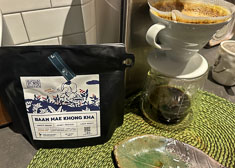 Home again for the first time in a week, we slept in, brewed up some of the coffee Alicia brought
back from Thailand (light but not acidic, fairly fragrant), refilled the feeders then watched birds
in the back yard for a couple of hours while I worked on a leftover Sopa and a dense honey-pastry from
the Patisserie in Walla Walla. Some of the regular birds were missing - the Towhees, Bewick's Wrens
and Flickers - and numbers of the others were reduced. Spring has progressed. Some of the Magnolia
buds have shed their shells exposing petals still tightly furled in fat pink spikes. Tiny gray-green
leaves shade the Snowberry. No pussy willows (willow pussies?); the willow died of blight last
summer and isn't coming back. I outlived it! Yaay.
Home again for the first time in a week, we slept in, brewed up some of the coffee Alicia brought
back from Thailand (light but not acidic, fairly fragrant), refilled the feeders then watched birds
in the back yard for a couple of hours while I worked on a leftover Sopa and a dense honey-pastry from
the Patisserie in Walla Walla. Some of the regular birds were missing - the Towhees, Bewick's Wrens
and Flickers - and numbers of the others were reduced. Spring has progressed. Some of the Magnolia
buds have shed their shells exposing petals still tightly furled in fat pink spikes. Tiny gray-green
leaves shade the Snowberry. No pussy willows (willow pussies?); the willow died of blight last
summer and isn't coming back. I outlived it! Yaay.
Thai Coffee
3/08/2026 Breathing (link to here)
Usually I can drink coffee in the evening with little effect but a caffeinated mocha I downed late yesterday in order to boost my calorie intake kept me awake most of the night. Perhaps as a consequence, I've been a little short of breath most of the day, which means that I inhale and exhale about thirty times per minute. The ventilator responds to my pacing, providing extra pressure (17 psi) when I inhale and slacking off to 4 psi when I begin to exhale. Thirty breaths per minute triggers an alarm on the ventilator, and while I'm accustomed to it beeping at me, the sound is nonetheless a reminder that my days are numbered. "We're all going to die some day", you might be tempted to say. Don't waste your breath. I take no comfort in that thought and you don't believe it anyhow, No one does, until they have to. But the beeping of my ventilator reminds me that death by "respiratory insufficiency" awaits me, soon.
Years ago when our cat was dying, she disappeared, and after searching the house I found her lying on a heating duct in the basement. She had crawled up there to die when the effort of interacting with her humans became too much. I'm starting to feel the same way. ALS distorts my voice and steals my breath, and I enjoy neither the sound I produce nor the effort required to produce it. Visiting isn't much fun anymore. But is it time to say goodbye just yet, I don't know.
Usually I can drink coffee in the evening with little effect but a caffeinated mocha I downed late yesterday in order to boost my calorie intake kept me awake most of the night. Perhaps as a consequence, I've been a little short of breath most of the day, which means that I inhale and exhale about thirty times per minute. The ventilator responds to my pacing, providing extra pressure (17 psi) when I inhale and slacking off to 4 psi when I begin to exhale. Thirty breaths per minute triggers an alarm on the ventilator, and while I'm accustomed to it beeping at me, the sound is nonetheless a reminder that my days are numbered. "We're all going to die some day", you might be tempted to say. Don't waste your breath. I take no comfort in that thought and you don't believe it anyhow, No one does, until they have to. But the beeping of my ventilator reminds me that death by "respiratory insufficiency" awaits me, soon.
Years ago when our cat was dying, she disappeared, and after searching the house I found her lying on a heating duct in the basement. She had crawled up there to die when the effort of interacting with her humans became too much. I'm starting to feel the same way. ALS distorts my voice and steals my breath, and I enjoy neither the sound I produce nor the effort required to produce it. Visiting isn't much fun anymore. But is it time to say goodbye just yet, I don't know.
3/11/2026 Company (link to here)
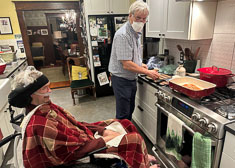
 David S, a close friend from
college, stopped in Seattle on his way home to Denver from the Philippines and Japan and spent a
couple of days with us. The weather was wet so we didn't go out birding or sightseeing; instead we
mostly sat in the kitchen and jungle room, drank coffee and talked. We talked about our kids of
course. David had just returned from a week-long ecotourism trip with his son James. Hosted by
Tao +, they
traveled by small boat through the islands at north end of Palawan in the Philippines, visiting
reefs and beaches, staying in bamboo shelters and dining on local Philippino cuisine.
David S, a close friend from
college, stopped in Seattle on his way home to Denver from the Philippines and Japan and spent a
couple of days with us. The weather was wet so we didn't go out birding or sightseeing; instead we
mostly sat in the kitchen and jungle room, drank coffee and talked. We talked about our kids of
course. David had just returned from a week-long ecotourism trip with his son James. Hosted by
Tao +, they
traveled by small boat through the islands at north end of Palawan in the Philippines, visiting
reefs and beaches, staying in bamboo shelters and dining on local Philippino cuisine.
We dined on farmed Atlantic salmon which David picked up at Whole Foods, smothered in chopped sweet onion and baked for 25 minutes. It was tender and flavorful, richer than any Pacific salmon I've had, and I enjoyed the leftovers for the next three nights remembering David gratefully with every bite. The green beans he steamed after sprinkling them with dried tarragon. They were delicious too.
David baking salmon, Ravenna
Salmon and green beans, Ravenna
We dined on farmed Atlantic salmon which David picked up at Whole Foods, smothered in chopped sweet onion and baked for 25 minutes. It was tender and flavorful, richer than any Pacific salmon I've had, and I enjoyed the leftovers for the next three nights remembering David gratefully with every bite. The green beans he steamed after sprinkling them with dried tarragon. They were delicious too.
3/12/2026 Air hunger (link to here)
I had the opportunity to experience it first hand yesterday morning, when we were trying to fix my headgear and got the hoses mixed up. Not for long - it probably wasn't even thirty seconds that I went without, but it's not like holding your breath. My lungs were not full but empty and there was nothing I could do. No air means no voice so I couldn't even express my distress. Panic took over. Darchelle got the mouthpiece hose hooked up and even gasping on that, I couldn't suck in enough air. I broke out in a sweat all over, then as I began to get some air through the mouthpiece, I began to calm myself down. After a few minutes, with the old headgear hooked up, I could even begin to talk again.
For the rest of the day I couldn't forget that desperate feeling of not having any air. It would pop up now and then - during conversation, while eating, during transfers when Darchelle takes off my headgear for a few seconds. Even breathing at a normal pace - 12 to 15 breaths per minute - I felt just a little short of breath but at that point, I recognized it as anxiety. When I really need air my breathing ramps up to 30 or more. This evening, after a nap and a quiet afternoon at home just the two of us, I'm starting to feel normal again.
I had the opportunity to experience it first hand yesterday morning, when we were trying to fix my headgear and got the hoses mixed up. Not for long - it probably wasn't even thirty seconds that I went without, but it's not like holding your breath. My lungs were not full but empty and there was nothing I could do. No air means no voice so I couldn't even express my distress. Panic took over. Darchelle got the mouthpiece hose hooked up and even gasping on that, I couldn't suck in enough air. I broke out in a sweat all over, then as I began to get some air through the mouthpiece, I began to calm myself down. After a few minutes, with the old headgear hooked up, I could even begin to talk again.
For the rest of the day I couldn't forget that desperate feeling of not having any air. It would pop up now and then - during conversation, while eating, during transfers when Darchelle takes off my headgear for a few seconds. Even breathing at a normal pace - 12 to 15 breaths per minute - I felt just a little short of breath but at that point, I recognized it as anxiety. When I really need air my breathing ramps up to 30 or more. This evening, after a nap and a quiet afternoon at home just the two of us, I'm starting to feel normal again.
3/23/2026 Geology (link to here)
I have a new project - learning and writing about the geologic history of Washington+. As I learn I write, and as I lie in bed in the morning (Darchelle tends to need to sleep in a little longer than I do), I go over what I've learned and decide what to investigate next. I've been at it for about a week now and have mostly covered the past five million years, which is about 2% of the geological timeframe applicable to the state. Just 49 weeks to go...though that isn't really the case because the amount of information available on the last five million years is probably about the same as that pertaining to the first 200 million. I wish I had started this project 20 years ago, when I was out in the field collecting rocks and could have done some of my own investigating. But I didn't, so now I do as best I can from my wheelchair and the Internet.
I have a new project - learning and writing about the geologic history of Washington+. As I learn I write, and as I lie in bed in the morning (Darchelle tends to need to sleep in a little longer than I do), I go over what I've learned and decide what to investigate next. I've been at it for about a week now and have mostly covered the past five million years, which is about 2% of the geological timeframe applicable to the state. Just 49 weeks to go...though that isn't really the case because the amount of information available on the last five million years is probably about the same as that pertaining to the first 200 million. I wish I had started this project 20 years ago, when I was out in the field collecting rocks and could have done some of my own investigating. But I didn't, so now I do as best I can from my wheelchair and the Internet.
Recollecting Agate
My new discovery today (from the book Geology Underfoot in Western Washington by Dave Tucker) was that the basalt underlying the agate-bearing gravel on Ceres Hill in Adna is the same Miocene (15 Ma) Grand Ronde basalt that flooded the entire Columbia basin.
I still haven't deciphered which formation the Ceres Hill gravel belongs to and where it picked up the agates. I do recall that we never found agates associated with the basalt, only with the gravel. The gravel also contained small pieces of petrified (mostly jasper) wood from a variety of tree species, but I've been unable to find the reference identifying the wood and my agate-hunting friend Pat, who probably knew somone who would have known that, died several years ago. What I have learned is that unlike the wood we collected, much of the Miocene age wood in local fluvial/terrestrial sedimentary formations is not silicified, just carbonized or even unaltered. The rounded pieces of jasperized wood we found with the equally rounded pieces of carnelian in creeks in the Adna hills therefore may have originated not in local Miocene mudflows but instead remote volcanics from the Eocene.
Yesterday I thought I had identified the basalt across the valley at Lucas Creek as the Eocene age (40 Ma) Northcraft formation, erupted earlier volcano west of the soon-to-develop Cascade Arc. Unlike the oxidized and stream-rounded agates from the Adna hills, at least some of the Lucas Creek agates appeared to have weathered out of the basalt with minimal stream transport. It seems reasonable that the deep soil on the hills above Lucas Creek could have formed by prolonged weathering of the basalt, weathering which could dissolve the basalt releasing the embedded agate relatively unaltered. On the other hand, photos I took along the landslide fork of the creek in 2009 appear to show both a volcanic mudflow (forming the waterfall step) and a well-consolidated and weathered conglomerate below the deep soil layer rather than basalt. It's frustrating how little I know, and how much I will probably never know, about the provenance of the carnelian and petrified wood Pat and I collected around the Chehalis basin.
An area south of the Chehalis Basin which Pat and I visited multiple times was Salmon Creek southeast of Toledo. The pseudocoprolites for which the area is famous are found in the late Miocene (6.1Ma) Wilkes formation+ but based on the lithology of that formation - volcanic mudflow, lakebed and ashfall deposits - I don't think that's the source of the carnelian we found in the streambed gravels. I assume the agate washes out of overlying gravels, age and origin again unknown.
Green Mountain just east of Kalama (mapped point may not be correct) was another of our favorite spots. The geology is simpler. The whole mountain is composed of volcanic rock dated to the late Eocene (38-35 Ma). We found agates in and under the bed of a small stream incised maybe 30 feet into a gentle slope near the top of the mountain. The agates were rough, as if they had weathered out of the host rock with minimal stream transport afterwards. The soil in the area looked deep, perhaps 10-20 feet or more, and if I remember correctly it did not contain much rock. That and the gentle topography suggest deep chemical weathering over a long period of time. Millions of years? If so, that's some seriously old dirt.
In one area where the stream valley opened up into a floodplain maybe thirty feet wide we had to dig down through about two feet of soil to reach the stream gravel which contained the agates. The gravel layer was less than a foot thick and lay on top of a dense fine-grained pinkish white silt. The silt layer was fairly easy to dig, not sticky like clay, and contained no rock at all. It was at least a foot thick. I didn't dig deeper because I was looking for agates, not answers. Now I wish I had devoted more energy to answers.
My new discovery today (from the book Geology Underfoot in Western Washington by Dave Tucker) was that the basalt underlying the agate-bearing gravel on Ceres Hill in Adna is the same Miocene (15 Ma) Grand Ronde basalt that flooded the entire Columbia basin.
I still haven't deciphered which formation the Ceres Hill gravel belongs to and where it picked up the agates. I do recall that we never found agates associated with the basalt, only with the gravel. The gravel also contained small pieces of petrified (mostly jasper) wood from a variety of tree species, but I've been unable to find the reference identifying the wood and my agate-hunting friend Pat, who probably knew somone who would have known that, died several years ago. What I have learned is that unlike the wood we collected, much of the Miocene age wood in local fluvial/terrestrial sedimentary formations is not silicified, just carbonized or even unaltered. The rounded pieces of jasperized wood we found with the equally rounded pieces of carnelian in creeks in the Adna hills therefore may have originated not in local Miocene mudflows but instead remote volcanics from the Eocene.
Yesterday I thought I had identified the basalt across the valley at Lucas Creek as the Eocene age (40 Ma) Northcraft formation, erupted earlier volcano west of the soon-to-develop Cascade Arc. Unlike the oxidized and stream-rounded agates from the Adna hills, at least some of the Lucas Creek agates appeared to have weathered out of the basalt with minimal stream transport. It seems reasonable that the deep soil on the hills above Lucas Creek could have formed by prolonged weathering of the basalt, weathering which could dissolve the basalt releasing the embedded agate relatively unaltered. On the other hand, photos I took along the landslide fork of the creek in 2009 appear to show both a volcanic mudflow (forming the waterfall step) and a well-consolidated and weathered conglomerate below the deep soil layer rather than basalt. It's frustrating how little I know, and how much I will probably never know, about the provenance of the carnelian and petrified wood Pat and I collected around the Chehalis basin.
An area south of the Chehalis Basin which Pat and I visited multiple times was Salmon Creek southeast of Toledo. The pseudocoprolites for which the area is famous are found in the late Miocene (6.1Ma) Wilkes formation+ but based on the lithology of that formation - volcanic mudflow, lakebed and ashfall deposits - I don't think that's the source of the carnelian we found in the streambed gravels. I assume the agate washes out of overlying gravels, age and origin again unknown.
Green Mountain just east of Kalama (mapped point may not be correct) was another of our favorite spots. The geology is simpler. The whole mountain is composed of volcanic rock dated to the late Eocene (38-35 Ma). We found agates in and under the bed of a small stream incised maybe 30 feet into a gentle slope near the top of the mountain. The agates were rough, as if they had weathered out of the host rock with minimal stream transport afterwards. The soil in the area looked deep, perhaps 10-20 feet or more, and if I remember correctly it did not contain much rock. That and the gentle topography suggest deep chemical weathering over a long period of time. Millions of years? If so, that's some seriously old dirt.
In one area where the stream valley opened up into a floodplain maybe thirty feet wide we had to dig down through about two feet of soil to reach the stream gravel which contained the agates. The gravel layer was less than a foot thick and lay on top of a dense fine-grained pinkish white silt. The silt layer was fairly easy to dig, not sticky like clay, and contained no rock at all. It was at least a foot thick. I didn't dig deeper because I was looking for agates, not answers. Now I wish I had devoted more energy to answers.
Meanwhile
Meanwhile we're still watching the birds visiting our feeders in the back yard. Usually we sit inside looking out through the glass of the French doors off the kitchen but yesterday it was warm enough that I sat for an hour outside on the back deck. I was surprised how much closer to the action I felt. Though in reality the birds were still 15-20 feet away, I felt as if I could almost feel the little brush of air from their wings as they flew, and see their individual feathers as if I were using binoculars.
The winter birds are still here but the yard is well on the way into spring. The magnolia buds are flopping open, their pink petals flaring vaselike but far too disorganized to hold water. The pale pink currant has extended its flower clusters and the flower buds of the Aztec Pearl are showing like, well, clusters of pale green pearls. Out front the purple plum trees up and down the street are already shedding petals.
It wasn't quite warm enough to sit out today but within a few days it's supposed to get into the low 60's. That might be enough to inspire us to go out birding somewhere, maybe to look for Mountain Quail over by the Hood Canal. They've started calling after being quiet all winter. It's an annual tradition every spring, a morning excursion over there to go listen for them. Last year we not only heard them but saw them too, but that doesn't happen every year.
Well, time to wrap up this entry. Darchelle had a class this evening upstairs over Zoom but she's done now and its time to finish up supper - some steamed vegetables for her and blended cauliflower soup, beer and cheese for me. I need another 300 calories before bed.
Meanwhile we're still watching the birds visiting our feeders in the back yard. Usually we sit inside looking out through the glass of the French doors off the kitchen but yesterday it was warm enough that I sat for an hour outside on the back deck. I was surprised how much closer to the action I felt. Though in reality the birds were still 15-20 feet away, I felt as if I could almost feel the little brush of air from their wings as they flew, and see their individual feathers as if I were using binoculars.
The winter birds are still here but the yard is well on the way into spring. The magnolia buds are flopping open, their pink petals flaring vaselike but far too disorganized to hold water. The pale pink currant has extended its flower clusters and the flower buds of the Aztec Pearl are showing like, well, clusters of pale green pearls. Out front the purple plum trees up and down the street are already shedding petals.
It wasn't quite warm enough to sit out today but within a few days it's supposed to get into the low 60's. That might be enough to inspire us to go out birding somewhere, maybe to look for Mountain Quail over by the Hood Canal. They've started calling after being quiet all winter. It's an annual tradition every spring, a morning excursion over there to go listen for them. Last year we not only heard them but saw them too, but that doesn't happen every year.
Well, time to wrap up this entry. Darchelle had a class this evening upstairs over Zoom but she's done now and its time to finish up supper - some steamed vegetables for her and blended cauliflower soup, beer and cheese for me. I need another 300 calories before bed.
3/31/2026 March (link to here)
Today I concluded my second week of learning and writing about the geology of Washington state by documenting and formatting the references to my sources. I vastly underestimated the scale of the project, and that was without the inevitable expansion of the project scope. Initially I wanted to get to the point where I knew the age and history of the landforms and formations we see as we drive around the state looking for birds. Well that requires having a reasonably clear picture in mind of the overall geologic history of the state, not to mention a decent knowledge of the geologic timescale+ and what was happening when in the rest of North America, and of course some familiarity with the current understanding of the plate tectonics underlying it all. Then as soon as I began looking into it, I wanted to get a sense of what the flora and fauna looked like, of how the familiar habitats in the state have changed since the ice age, and farther back to at least the mid-Tertiary. And I've always wondered where the carnelian came from that Pat and I collected up and down the foot of southern Washington Cascades.
There is so much to learn. The vocabulary alone is a challenge, though Google seems to have a pretty good handle on it and it helps that I still remember a few words and concepts from my geology courses in college. At first I thought I would just do a bunch of reading online about a particular period, then write a summary of what I learned. That almost worked for the Pleistocene but after my first week the stories started getting all mixed up in my head, so I started writing notes about each article and paper as I read it and that led to saving and linking to each reference in my notes, and that led to today's project - properly and consistently formatting all my references. Now I feel I am ready to move forward, or back, into the Eocene, though I really need to go back, or forward, into the Miocene and clean up the mess of my notes for that period first.
As of today I've devoted about 60 hours to my study of Washington geology. I'm back somewhere in the Pliocene. After another 60 hours I hope to have mastered the Miocene, with a few excursions back to the Eocene for context. I realize I'm overlooking the Oligocene, but I don't think much happeed, at least in Washington, during that period. I could be wrong about that.
Today I concluded my second week of learning and writing about the geology of Washington state by documenting and formatting the references to my sources. I vastly underestimated the scale of the project, and that was without the inevitable expansion of the project scope. Initially I wanted to get to the point where I knew the age and history of the landforms and formations we see as we drive around the state looking for birds. Well that requires having a reasonably clear picture in mind of the overall geologic history of the state, not to mention a decent knowledge of the geologic timescale+ and what was happening when in the rest of North America, and of course some familiarity with the current understanding of the plate tectonics underlying it all. Then as soon as I began looking into it, I wanted to get a sense of what the flora and fauna looked like, of how the familiar habitats in the state have changed since the ice age, and farther back to at least the mid-Tertiary. And I've always wondered where the carnelian came from that Pat and I collected up and down the foot of southern Washington Cascades.
There is so much to learn. The vocabulary alone is a challenge, though Google seems to have a pretty good handle on it and it helps that I still remember a few words and concepts from my geology courses in college. At first I thought I would just do a bunch of reading online about a particular period, then write a summary of what I learned. That almost worked for the Pleistocene but after my first week the stories started getting all mixed up in my head, so I started writing notes about each article and paper as I read it and that led to saving and linking to each reference in my notes, and that led to today's project - properly and consistently formatting all my references. Now I feel I am ready to move forward, or back, into the Eocene, though I really need to go back, or forward, into the Miocene and clean up the mess of my notes for that period first.
As of today I've devoted about 60 hours to my study of Washington geology. I'm back somewhere in the Pliocene. After another 60 hours I hope to have mastered the Miocene, with a few excursions back to the Eocene for context. I realize I'm overlooking the Oligocene, but I don't think much happeed, at least in Washington, during that period. I could be wrong about that.
During March we spent all or part of five days in the field, submitted 34 complete checklists (151 ytd)
and saw or heard 128 species. Of those 24 were new for our our Washington 2026 list giving us a total
of 209 (Darchelle has 210) for the year to date, 14 fewer than last year. One, the Cave Swallow, was
new for the state for both of us, giving me 430 and Darchelle 413.
.
.